Category Archives: Text Post

Another Milestone 2015

We finally reached another milestone, the complete end of travel and the normalizing of life making it a great way to cap off 2015 and start 2016. The past few years have been amazing for us, in a good way, but I’m glad it’s over: for the first time in 37 months, I do not have a flight/trip scheduled or planned, for the first time in 29 months, I know where I will be living and working the following year, and after spending every day with each other for 18 months, Jac and I finally spent a couple days apart when she went to visit her family. I once thought it would be nice to be a traveling sales engineer type guy but I now think the idea is pretty awful. I think too much travel is completely possible.

In a stroke of very good luck, we moved into the neighborhood we lived in previously. In some ways it’s like we never left and in others it’s amazing how much has changed in the last two years. I’m starting to get back into a daily routine of going to work and I have to admit that I am very excited to have coworkers, a desk, and projects to work on. I never would have thought I would have been excited to go to work but I find myself thinking about how great it is to be back in a normal day to day routine.

Unlike conventional wisdom said or what our expectations were, we never really experienced culture shock on our return to the US. I think it was because we were excited to return to the US – we had completed what we set out to do and we had thoroughly enjoyed every moment. Staying outside the US would have simply been filling time.

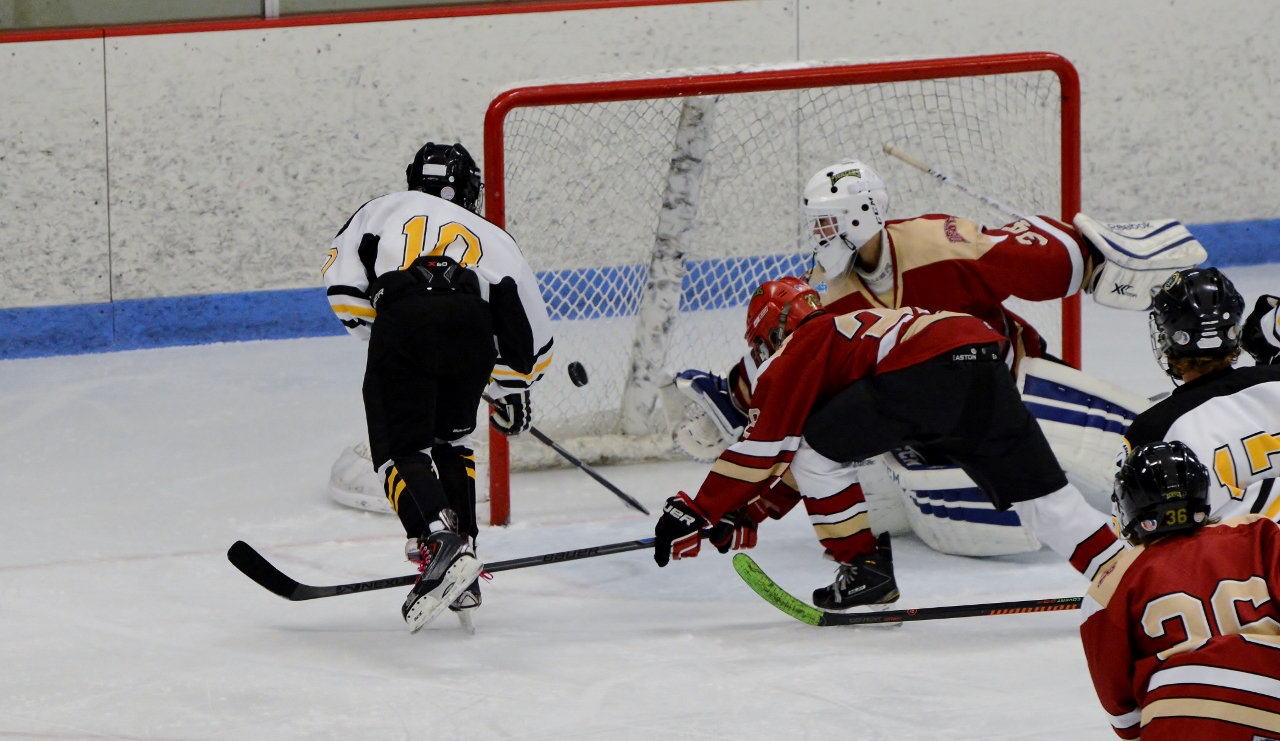
Since we’ve been back we’ve had a chance to run around the US, enjoy some of our old favorites like hockey, and try some new things like an unseasonably warm winter in Minnesota. We are actively looking for the good food we had overseas and making some of our favorites. Much like books being made into movies, our cooking is similar but just not the same. Good reason to go back and visit our favorite spots again in the future :).

All in all, it’s great to be back. The honeymoon sure hasn’t worn off yet. I put up some photos of the random things and stuff we’ve seen since we’ve been back. We’re happy to be back in the US and we’re happy to be back in Minnesota :).

Enjoy the photos!

Chris W.

End to Nomadic Life 2015

Our nomadic life is over! Believe it or not, this journey really started about 27 months ago. In 2013, we moved to upstate New York so Jac could finish her doctorate. We always knew there was the possibility we would have to move for Jac’s education so we purposely had few belongings and lived lightly; we left our life in St. Paul with a Toyota Corolla filled with belongings and drove east. We traveled a lot during our time in New York: we visited the big sights of the east coast (DC, NYC, Adirondacks, Catskills, Gettysburg, Boston, Vermont, New Hampshire, etc.), I traveled a lot for work, and we headed back home to Minnesota and South Dakota quite a few times. All told, I was only ‘home’ in New York about 40-50% of the time during the 12 months we lived in New York. That’s a lot of traveling! While we never really planned on a world trip we decided to seize the moment and take the very long way home to Minnesota and visit 160 cities in 42 countries on six continents over the course of 13 months. Once we returned to the US we spent two months interviewing, catching up with family, visiting friends, and visiting nine states around the US, before settling down. Luckily, during the last two months we found an apartment in our old building in St. Paul and I landed a job. So, that’s 27 months. It’s finally over. Our feet are no longer itchy and we’re very ready to be in one spot for awhile :).

We were very lucky and had few issues while traveling. We had food poisoning a lot and both Jac and I caught influenza A but that’s about as bad as we had it. We happened to miss a lot of disasters and other unfortunate events. Sometimes we were in the general vicinity, sometimes we missed the event by a few days, and sometimes the places we visited were later completely destroyed, like:

  • The Bárðarbunga volcano in Iceland erupted in 2014 just after we left.
  • The Annapurna avalanche in Nepal in the fall of 2014 killed a whole bunch of people. We were going to trek the Annapurna circuit but decided to go on the Langtang Trek instead due to Langtang being less popular. The timing was right where we would have been in the avalanche zone if we would have hiked Annapurna.
  • On Dec 31/Jan 1 2014/2015, at midnight, there was a human stampede in Shanghai which killed 36 people on the Bund. We were staying about a block off the Bund and could hear the commotion but didn’t know what happened until the next day.
  • The Nepal earthquake in the spring of 2015. This earthquake was very bad and destroyed the Langtang trek in many areas – a 1.5mi wide landslide destroyed the village of Langtang and killed everyone in it. Bhaktapur, a medieval Nepali city we visited, was also destroyed.
  • Cyclone Pam in New Zealand in the spring of 2015. We happened to stay in an area that was slightly out of the path of the cyclone, Mt. Maunganui, and just missed the full force of the cyclone to the south.
  • We missed the battles in Israel in the winter of 2014 but when we arrived in the summer of 2015 we heard the sounds of war in Syria from our lodging in Madjal Shams in the Golan Heights.
  • Cecil the lion was shot in Zimbabwe shortly before we arrived in the summer of 2015.
  • We were in Athens, Greece, when the banks shut down in summer of 2015 and no one knew what was going to happen.
  • There was a large 8.2 earthquake in Santiago, Chile, two weeks after we left. We were staying on the 18th floor of a hotel so that for sure would have been a bit scary.
  • We visited Greece, Bulgaria, and Hungary before the huge influx of refugees. Keleti train station in Budapest was a normal train station when we visited in the spring of 2015 and not the place over-run with refugees in the summer of 2015.

We were never robbed, we never had anything stolen, and the biggest scam we fell prey to (that we know of) was $11. Getting sick was the worst thing that happened to us and I’m so very happy it was the worst thing that happened to us! The reocurring problems we commonly had came from taxis (fake taxis, taking the long route, giving back incorrect change, etc) and rental cars (fine print). All said, we had incredibly good luck during our journey.

So now it’s time for everyone’s favorite part: statistics! We tracked a lot of things while traveling and I figured it would be neat to share some of the results.

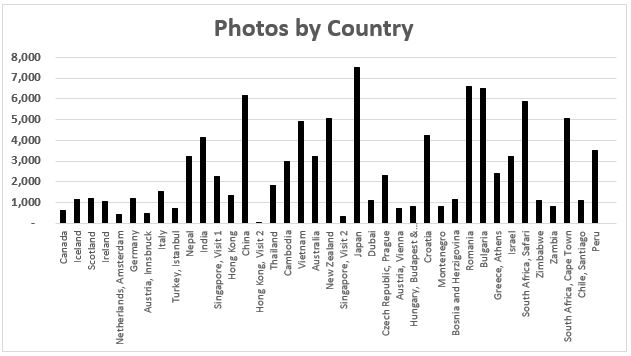
We’ll start with the easiest first: the sheer number of photos we took during our travels. Overall, we took nearly 105,000 photos totaling about 1.2TB. This means that on any given day we took nearly 284 photos. I thought I put up a lot of photos of our trip on this website but I only put up 2,175, or about 2.1% of all photos we took. We took a ton of photos. It made sense we took a lot more photos in countries we stayed in longer so I made two graphs, one with the total number of photos taken each country we were in and then the average photos taken per day we were in the country.
Photos by Country

Figure 1 – Total Photos Taken in Each Country

Photos taken per day per country

Figure 2 – Total Photos Taken in Each Country Per Day in Country

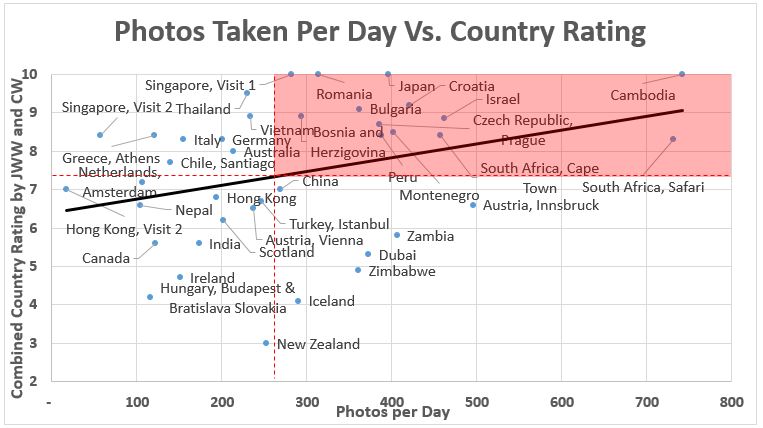
Jac and I have sat down and gave each country a 0-5 rating based on a handful of variables and, believe it or not, the number of photos we took per day in each country loosely corresponds with how much we enjoyed the country. In general, if the number of photos per day for a given country was above the average photos taken per day then it’s a country we want to return to in the future. I made a graph showing this relationship and I also put a red box in the areas we visited where we took an above average number of photos and the country received an above average score. When looking at the countries in the red box I think, “yup, those places were awesome”, and they are on our short list of places to revisit in the future.
rating vs photos taken per day

Figure 3 – Photos Taken Per Day vs. Combined Country Rating

We used very different modes of transportation to get around: planes, buses, boats, private cars, self driving via rental cars, walking, and so on. We really came to enjoy train rides and we greatly preferred train rides whenever possible; it was fun to sit back and watch the countryside go by while enjoying a picnic lunch! Plus, most train stations are in the center of cities and easy to get to. Planes were OK but flying around the world has about as much, or more, hassle than flying in the US – it sucks to arrive so early, lots of planes are late, planes are cramped, and blah, blah, blah. Private car was always the best but could be expensive so we focused on hiring drivers in low cost areas. We hired a driver for about two weeks in Rajasthan, India, which was surprisingly cheap, and we hired some drivers in Vietnam, where their fees were slightly higher than the bus fees we would have to pay. We disliked busses the most – cramped, hot, easy to get car sick, bumpy, and loud. Before I saw the data I thought we had taken the train way more than we had and I thought we had rented cars a lot less than we did. If we had to do it over, I think I’d try and rent cars more often and take the train more often!

Modes of Travel

Figure 4 – Modes of Transportation

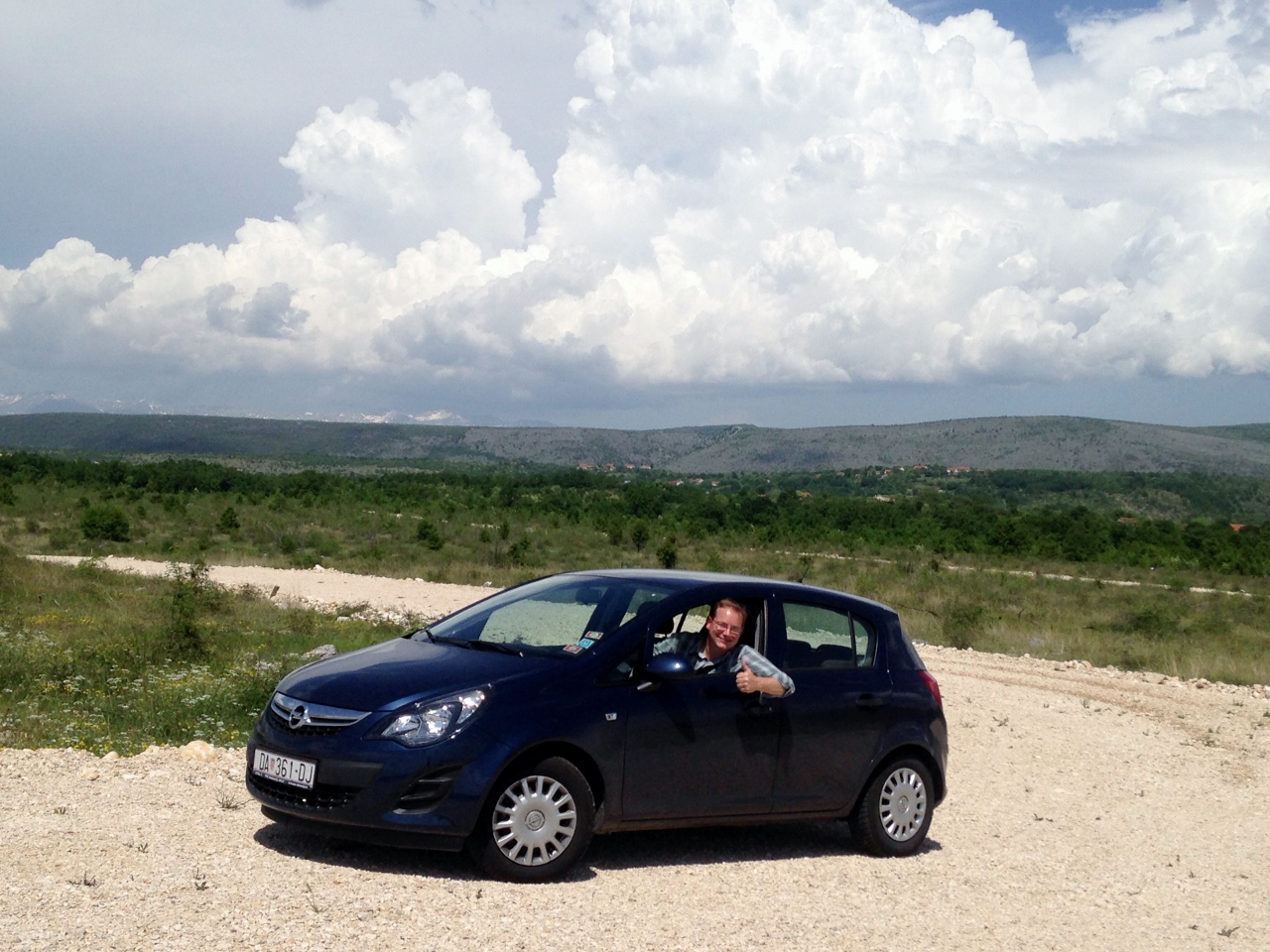
We rented cars a handful of times. Having the freedom to set our own schedule and go where we pleased was so awesome. Some countries it was really cheap to rent a car ($9/day in Ireland) and other countries it was quite expensive ($40/day in New Zealand). It was fairly straight forward to get into the swing of things even in countries where road rules are more like suggestions like in Bosnia, Croatia, Romania, Montenegro, and Bulgaria. Our rental cars were usually beer cans with an engine so we never had to worry about over driving the road conditions and, as we found, people are really attentive and good drivers overseas simply because a lot of people do not follow the road rules and have to pay attention. As an example, it was surprisingly common to see people driving towards us in our own lane – pretty uncommon in the western world but very common in a lot of other places. Generally, it was very easy to rent cars and be on our way. I spent a lot of time reading the fine print of every rental agreement because there were a lot of “gotchas” in rental agreements, like charging $5/day for a toll tag, mileage charges, fuel surcharges and so on.  South Africa stands out as being the best place to drive – the rentals were cheap ($16/day with insurances) roads are in good condition and the drivers are incredibly considerate. They have something called “yellow line driving” where a vehicle will drive on the shoulder, over the yellow lane, to allow people to pass. It’s fantastic! We spent the most time and distance driving around New Zealand, which super sucked because the roads aren’t straight and it takes forever to get anywhere. New Zealand also had the most expensive car rental at about $40/day and we had really expensive fuel to boot. We put on about 11,500mi on the various rental cars we drove. About 61% of the time we drove on the left side of the road. We would switch back and forth too and this ended up causing confusion on which side of the road was correct, we had to think about it!

Miles driven on left or right side

Figure 5 – Left Side or Right Side Driving

We stayed in a surprisingly large variety of places during the trip. We had a few flights that went overnight and even slept on a boat but overwhelmingly AirBnB was our go-to lodging. We had a pecking order: whenever possible we would try to rent apartments/flats that we could have to ourselves, followed by a shared room in an AirBnB place, followed by a hotel/motel and lastly, VERY lastly, a hostel. We enjoyed our AirBnB visits and had great, once in a lifetime, experiences all the time because of awesome hosts. AirBnB was a bit trickier than a regular hotel but we learned how to make it work and we really made it work! We can’t recommend Airbnb enough, it really brought our trip from great to amazingly fantastic.

Types of Lodging

Figure 6 – Types of Lodging

When we first started the trip we traveled very quickly. Almost every single night was at a new place which meant we had to unpack and repack and find our new lodging every single day. This isn’t hard to do for a week or two but it’s very difficult to keep that momentum. We had the first four weeks of travel booked before we left the US and we realized around week two that we needed to slow down so we weren’t so tired from traveling. We started to travel a bit more slowly and then we reached a steady state of about 2.5 days at a location before moving on. By traveling slower we were able to enjoy the sights more and weren’t so pressed for time. The graph below shows how often we changed lodging in a given week. If we changed lodging seven times in a week that means we were changing lodging every single day of the week. I think staying in a place for about 2.5 days was just right for us and our energy levels. I became too bored if we stayed in a place longer and too tired if we moved around a lot more.

# of moves per week

Figure 7 – Number of Moves Per Week

We saw a lot of the world. The only continent we missed was Antarctica but that’s on the list of places to visit in the future. We didn’t spend a lot of time in any one region but there were a few regions, like the Middle East and South America, where we didn’t spend much time at all. We figured South America could be easily reached by from North America and there were only a couple of places we wanted to visit in the Middle East due to the current instability. I made a graph showing the regions we visited. Since some regions are really big, like Asia, I decided to further delineate by major region. While India and Nepal are part of Asia, they are monumentally different than China or Japan. Same with Eastern and Western Europe.

Percentage of Time in Each Region

Figure 8 – Percentage of Time in Each Region

There were countries we REALLY enjoyed visiting and would happily go back, like Japan, Romania, Croatia, Singapore, Australia, and South Africa, but there aren’t really any regions we are particularly in love with. We had great experiences everywhere and there are redeeming qualities to every place we visited but I think Western Europe is the only region we wouldn’t make an effort to revisit. It’s a lot like the US so it’s not as “different” compared to visiting somewhere like SE Asia.

We thought a lot about the worst and planned for failure along the way. We made sure we had our financial house in order gave directions on how to retrieve our bodies in the event of death or incapacitation. While death/incapacitation was the biggest issue planned around, we thought a lot about the nuisance items that could fail and made sure we had adequate backups or plans for fixing. I break everything, even unbreakable items, so it was very important to think about the items that are cheap and not thought of often, like an iPhone power cable, but have super high impact when broke.  That said, we, or I, broke a lot of stuff and I thought it was worth sharing.

Things we broke and why, from cheapest to most expensive:

  • My RFID chip in my passport. No clue how it failed.
  • iPhone power cable. Cumulative damage.
  • MicroSD card holder (x2). Cumulative damage.
  • 5 Euro bill. I was holding it.
  • Wireless optical mouse. Cumulative damage?
  • iPhone screen. Sudden and unplanned deceleration.
  • Tamron 70-300MM zoom lens. Cumulative damage.
  • Travel laptop. Battery died.

Yes, I actually ripped a five euro bill in half by accident. I don’t know of anyone else who has ever broken paper money but I break everything so… yeah.

So this is it. Kind of our trip in a nutshell and a summary of what we did. I have some recommendations below for making an Airbnb stay easier in case anyone is curious because I know some folks are reluctant to sign up for Airbnb.

Chris W.


———————————————————————————————

Recommendations for successful stays at an Airbnb:

  • Look for places that have at least three positive, in detail, reviews.
  • Make sure there are enough photos of the place to understand what is being offered.
  • If it’s an apartment/condo, make sure to ask what the name is on the address board / what the unit number is.
  • Make sure to factor in time for immigration / customs / security / taxi ride etc. When scheduling the meet up, ask the host “we arrive at X:YY PM, how long does it take to get to your place?” instead of assuming how long it’ll take. Hosts generally know their city best.
  • Show up outside of normal work hours but not too late, these people have normal lives usually – 5pm to 9pm.
  • It can be easier to meet a host at a restaurant / landmark near the lodging.
  • Whenever possible, use the host to arrange pickup. Some hosts charge for this and it can be worth its weight in gold.
  • If it’ll be impossible to communicate with the host, let the host know and then set a window to meet and ask for some help finding a way to communicate with them. “We do not have a SIM card that works in your country, we will not be able to reach you, we will arrive between 6-7PM”, “if we arrive later, is there free WiFi available nearby we can use to reach you?”
  • Inform the host of problems immediately using Airbnb.
  • Clean the place before leaving.
  • Leave an honest review.


Being Home

It’s good to be home, it’s good to be home!

It’s been five weeks since we landed and we’re still a bit nomadic visiting family and friends all over the Midwest. We have signed a lease in our old apartment complex and I almost have a job squared away so our nomadic life is almost over. I am really, really, really, looking forward to a normal life. I traveled 50-75% of the time during my last 18 months of my job, spent 13 months traveling around the world with Jacquelyn, and will have traveled around the US for around two months before finally settling down. After almost three years of being a nomad, my feet are no longer itchy and I’m ready to have some sort of roots!

It’s been fun to hear what we missed during the last 13 months and catch up with the people who mean the most to us. I thought we did OK keeping up with what was happing back in the US but it’s clear we missed a lot. I’m happy we’ve had a handful of weeks to catch up with family and friends before jumping back into real life!

We haven’t had any real difficulty coming back to the US and haven’t had ‘reverse culture shock’ at all. I have a couple theories why: 1) we never had time to fully adapt to a different culture since we moved around so much, 2) we were ready to come home. The most difficult issue I encountered, driving on the correct side of the road, is no longer a problem so I’d say we didn’t have any problems returning and were able to sort of pick up from where we left off.

The weirdest thing I encountered was realizing I have lost A LOT of English words. This has been especially difficult when interviewing for technical positions as there’s a lot of words I haven’t used for some time so I’ve had a difficult time explaining technical/complex problems simply because I’ve lost the words! But that’s not the worst, the worst is forgetting simple words like ’rust’; I’ve had to resort to saying things, ‘that red stuff that grows on metal when it’s wet’. It has been surprising to say the least.

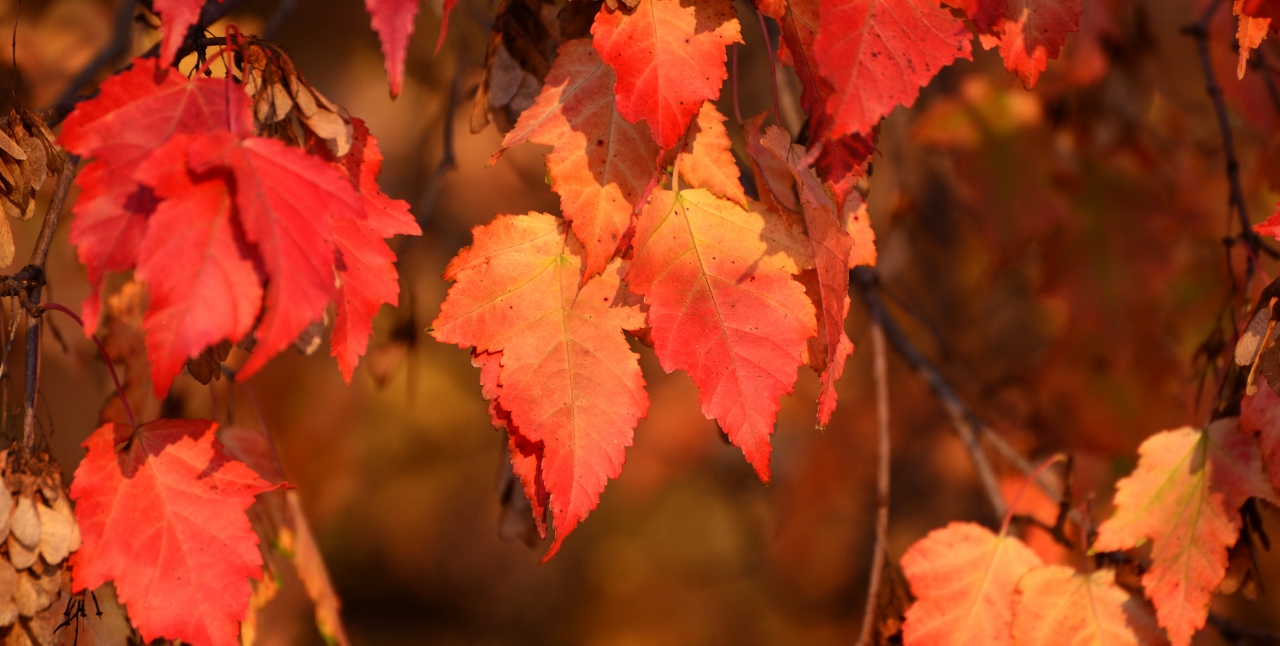
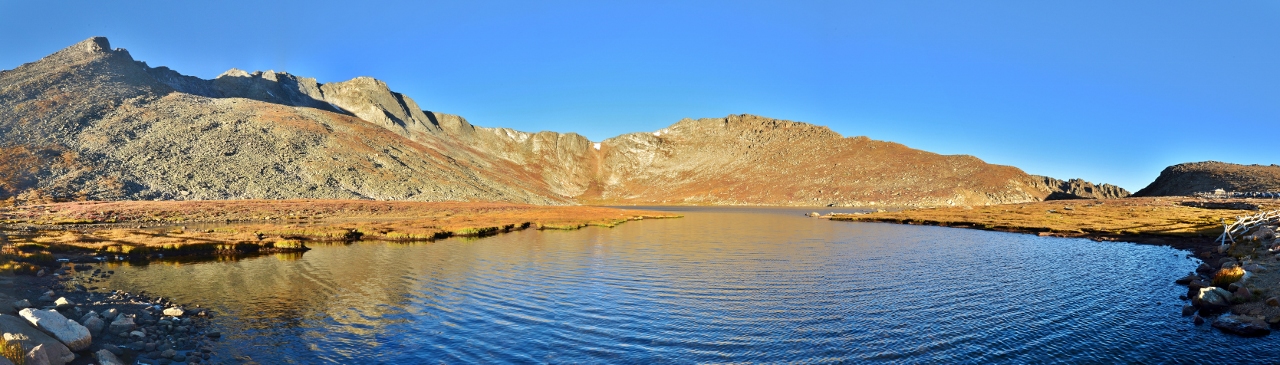
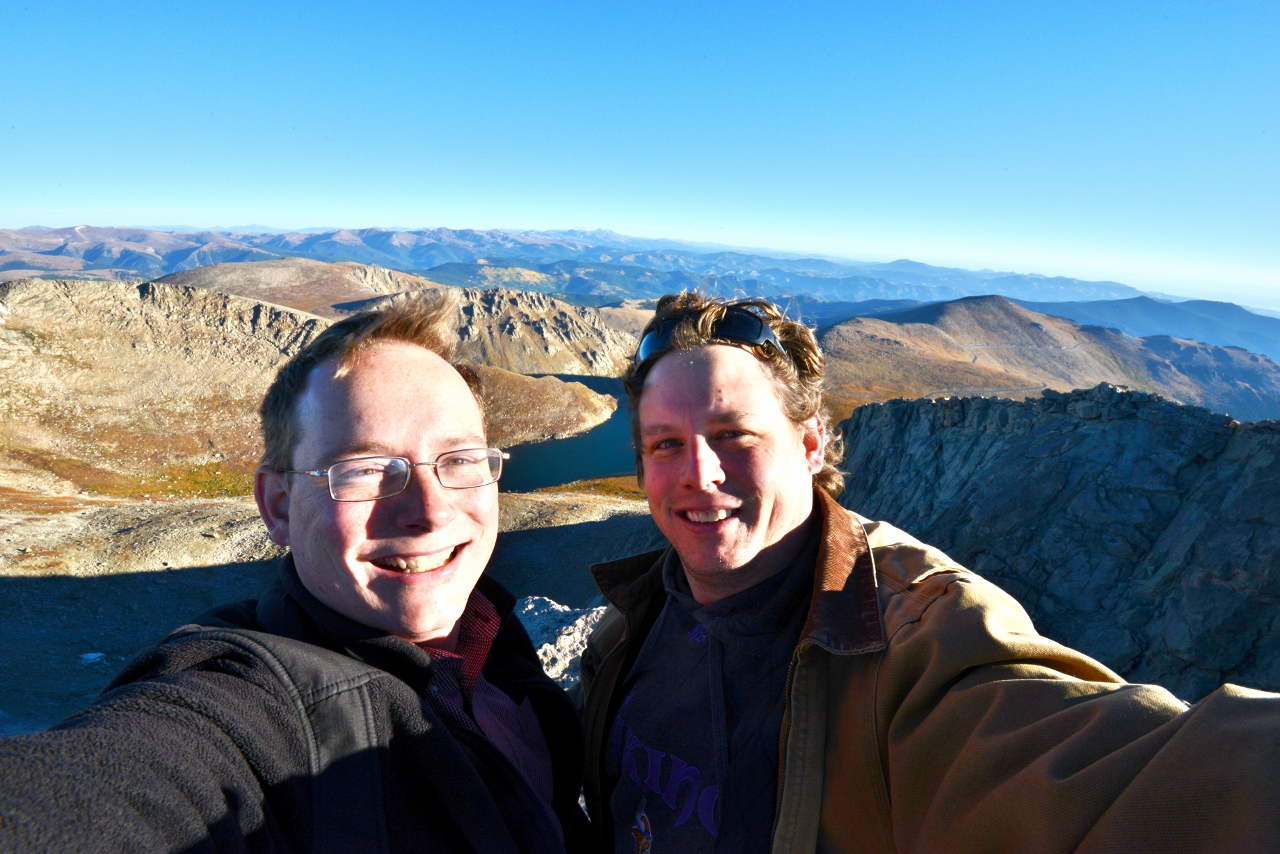
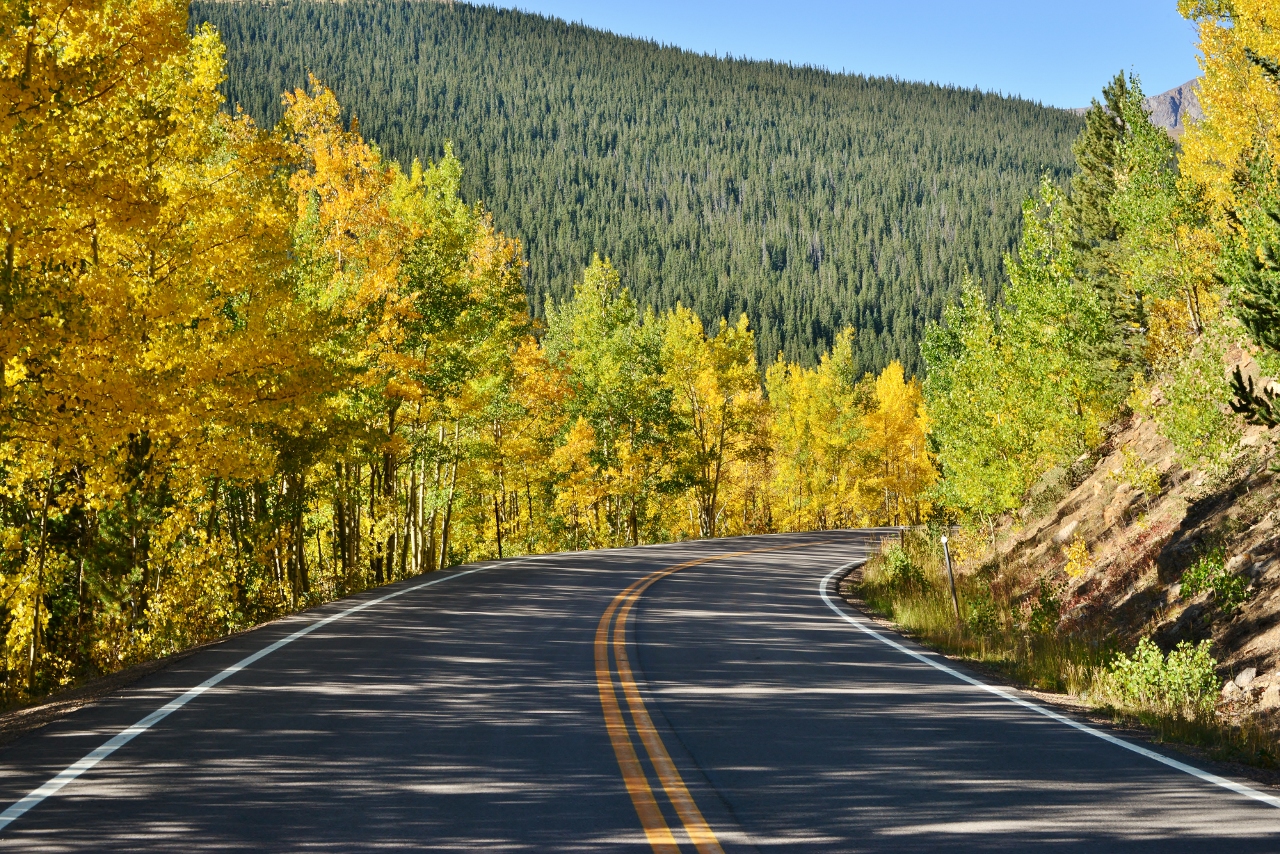
I’m happy we came back to the US in the fall. It’s been great weather so far and I’ve been able to enjoy some hiking, star gazing, and beautiful leaves. Overall, it’s great to be back :).

Enjoy the photos!

Chris W.

Return Home!!

We are home! After 13 months, 160 cities, 42 countries, and six continents, our trip is over. Jacquelyn and I have been back in the US for a bit over two weeks and it’s definitely good to be back. It’s been wonderful to catch up with our families and friends, eat familiar foods, and see familiar places. We were warned about ‘reverse culture shock’ and difficulties coming back to the US but so far problems are very few. The biggest problem I’ve had is remembering to drive on the correct side of the road! We spent about 61% of the time driving on the left and we switched back and forth a few times so I need to think hard about where I should be whenever I drive. Otherwise, we really haven’t had any problems!

We are slipping back into our former lives and re-discovering the things we enjoyed. In a way our travels were very similar to where we are now; there are a million little details to be sorted so we can re-start our lives. Instead of finding where/what we’re going to eat, learning how to get from A to B, and finding our lodging we are now finding cell phone providers, shopping for different insurances, looking for places to live, trying to get jobs, and so on. A lot of very important details have changed in the last year and there’s a lot for us to learn.

Since we’re back it’s been fun to compare similarities between the places we’ve visited and the US:

  • Clothing styles are similar, especially for men.
  • Everyone thinks the drivers in their country are bad.
  • Everyone thinks their region has very erratic weather.
  •  Pretty much everyone likes America, especially Americans.
  • Every country has something like the TSA and they are equally bad.
  • Somehow, Australia and New Zealand have the worst internet in the world.
  • People pretty much want the same things in life but express it slightly differently.
  • Customer service when resolving problems is pretty bad all around. Except Japan.
  • People suck at counting. We regularly received the wrong change back, both too little and too much.
  • Everyone thinks their government is filled with idiots and their current government is the worst ever.
  • Lastly, around the world, BMWs don’t come with functional blinkers. It’s not a USA thing.

We had an immense amount of good fortune and luck on this trip. We: never missed a plane, we never had a cancelled flight, made every single transportation connection, we were never robbed, we never had to change our travel plans because something didn’t work out, and the most expensive scam we fell prey to was about $10.

We met a lot of incredible people along the way and we learned that pretty much everyone wants the same things for themselves and their families. I do believe that there are no friendlier and welcoming people than Australians. We met a lot of really cool and friendly people but there’s something to Australian’s openness and kindness. All we had to do was show up and it seemed like we already had friends in Australia! Australians aside, the world is a friendly place and we received so much help from some many people along the way it was unreal.

We had quite the adventure and it was an amazing experience. That said, all-in-all, we are very happy to be back in the US. We’re still going to be nomads because we are traveling around to see family and do some fun stuff before we finally settle down. We’ve visited Colorado, Minnesota, and South Dakota and have plans to visit Washington DC, South Dakota again, Washington state, and maybe Wisconsin before we’re done. It’ll be good to have our own place we call home :).

Enjoy the photos!

Chris W.

Israel 2015

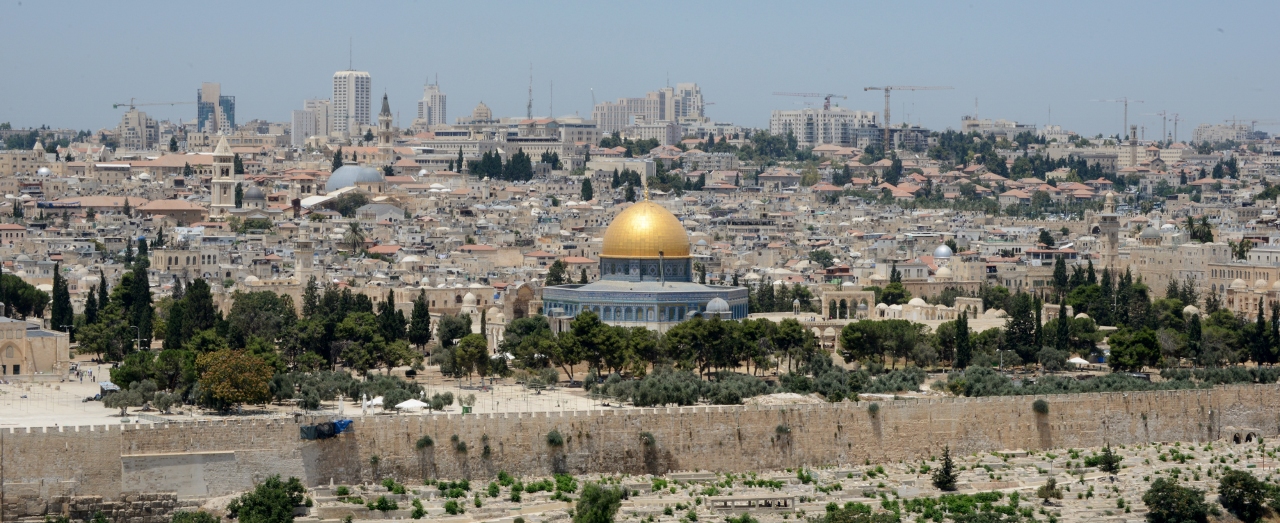
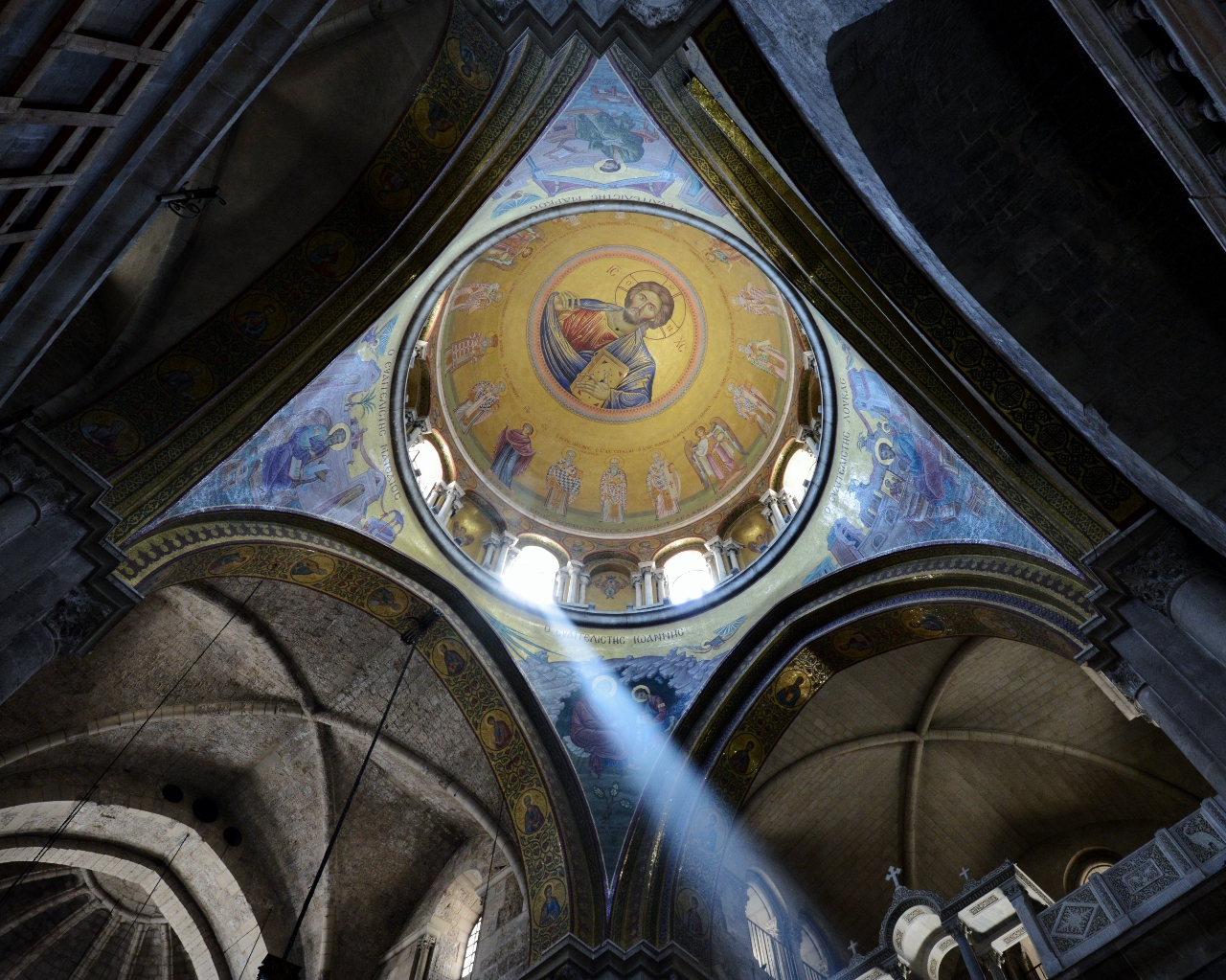
After traveling around Israel for a while, I think it might be impossible to describe the place. It’s quirky place with incredible sights, super friendly people, a surprisingly large amount of things to do, and excruciatingly hot weather. Most/all of us know many people travel to Israel for religious reasons so it wasn’t surprising when we saw people carrying large crosses in the Old City of Jerusalem, watching groups of “Israel by Birthright” scurry from one religious sight to another, or made way for the flocks of American high schoolers in Jewish Camp learning about Judaism on top of Mt. Masada after a sunrise hike. We expected it. There were three things we did not expect and they have little to do with religion: natural sights, the intense security, and the people we met. I’m not going to spend much time with the religious side of Israel, information is readily found online and pretty much matches our experiences at the sights we visited. Instead, I’m going to write about the three things we found surprising because we didn’t have a clue and the information online doesn’t really doesn’t do it justice. I like to think of this as the side of Israel that is either ignored or not actively shared.

There’s a massive amount of things to visit in Israel. Israel has the honor, or maybe curse, of being very important to a handful of Abrahamic religions (Judaism, Christianity, & Islam) and has been very important for many empires (Egyptian, Persian, Greek, Roman, Ottoman, etc.) going back 6,000+yrs. There are so many different ruins, relics, and important historical spots that pretty much 2/3rds of the world’s population could find something in Israel to tie back to their own heritage; it’s mindboggling so many important places are in such a small area. It probably has a lot to do with the different groups of people trying to kill each other in the area for millennia.

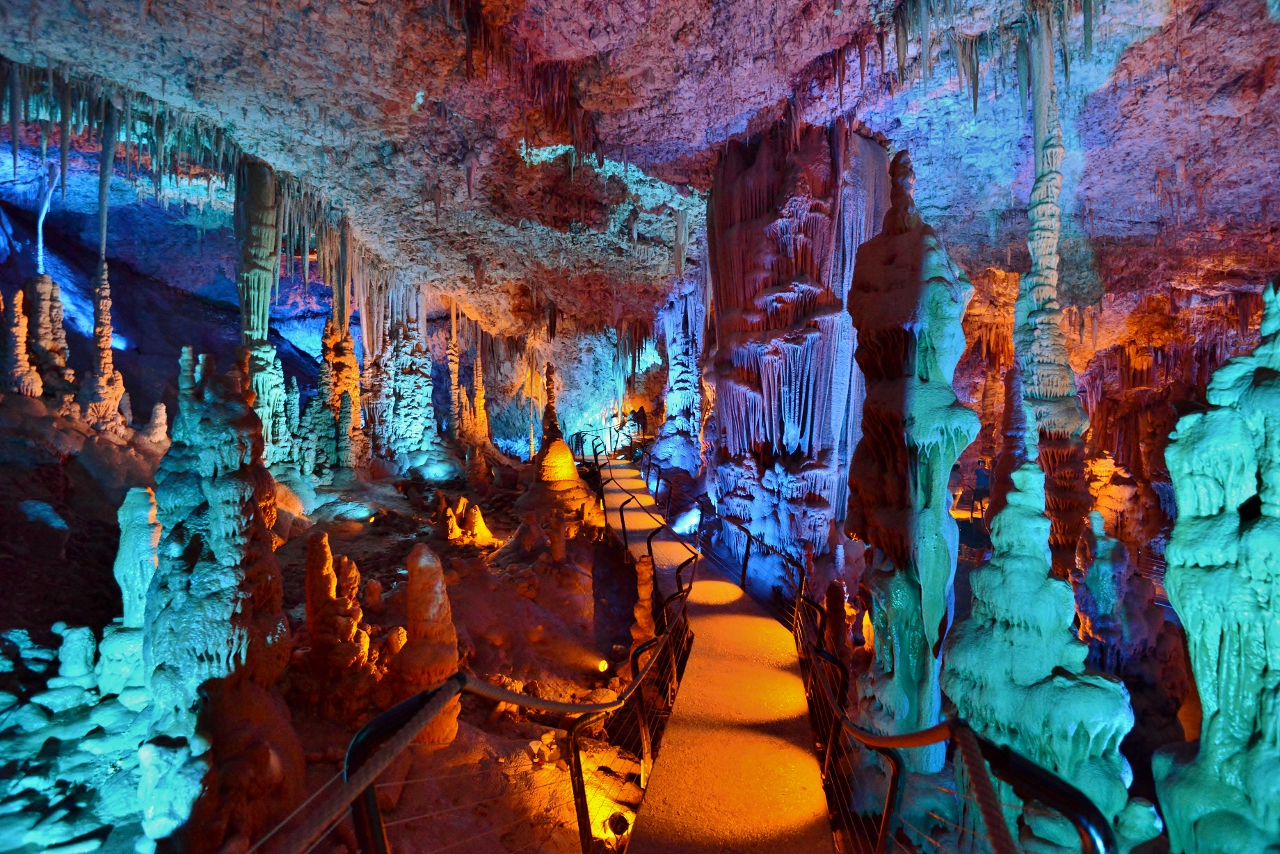
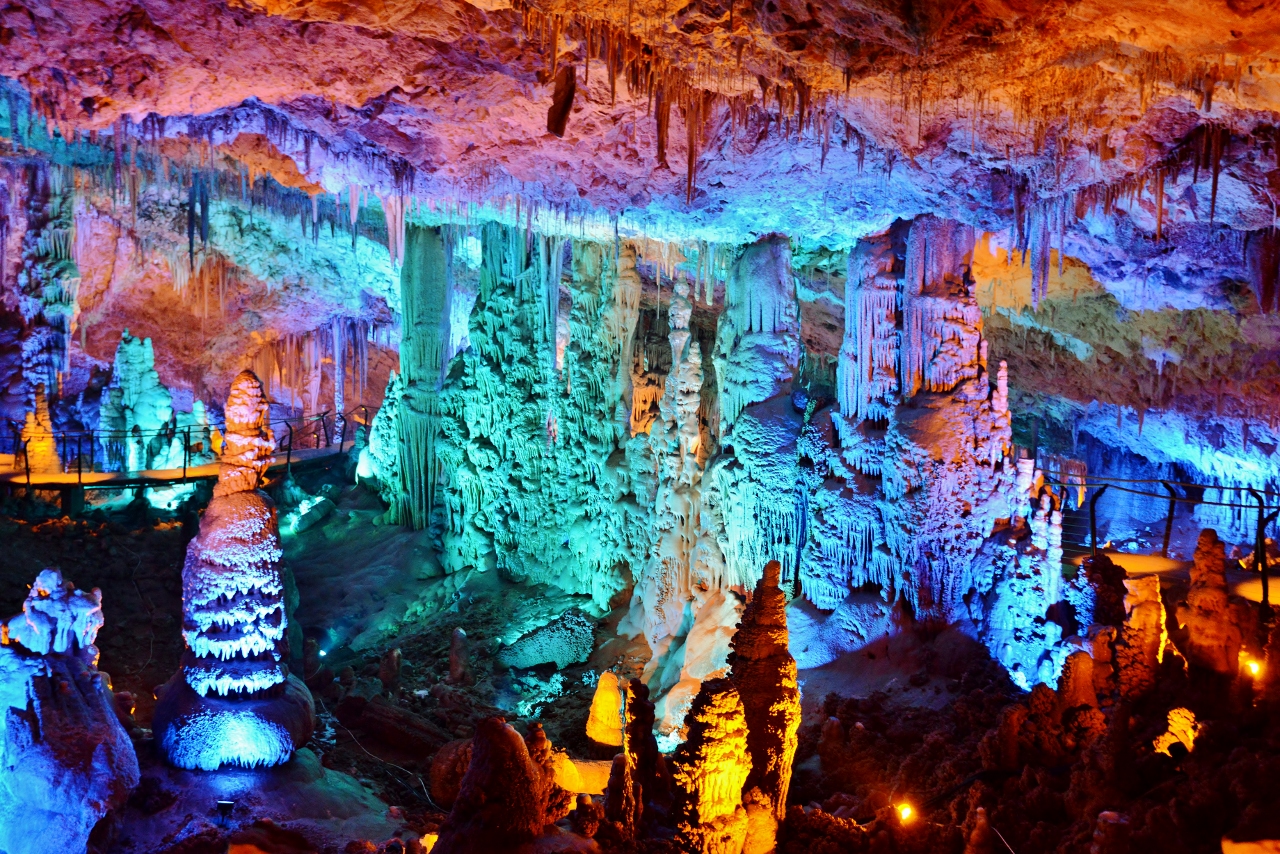
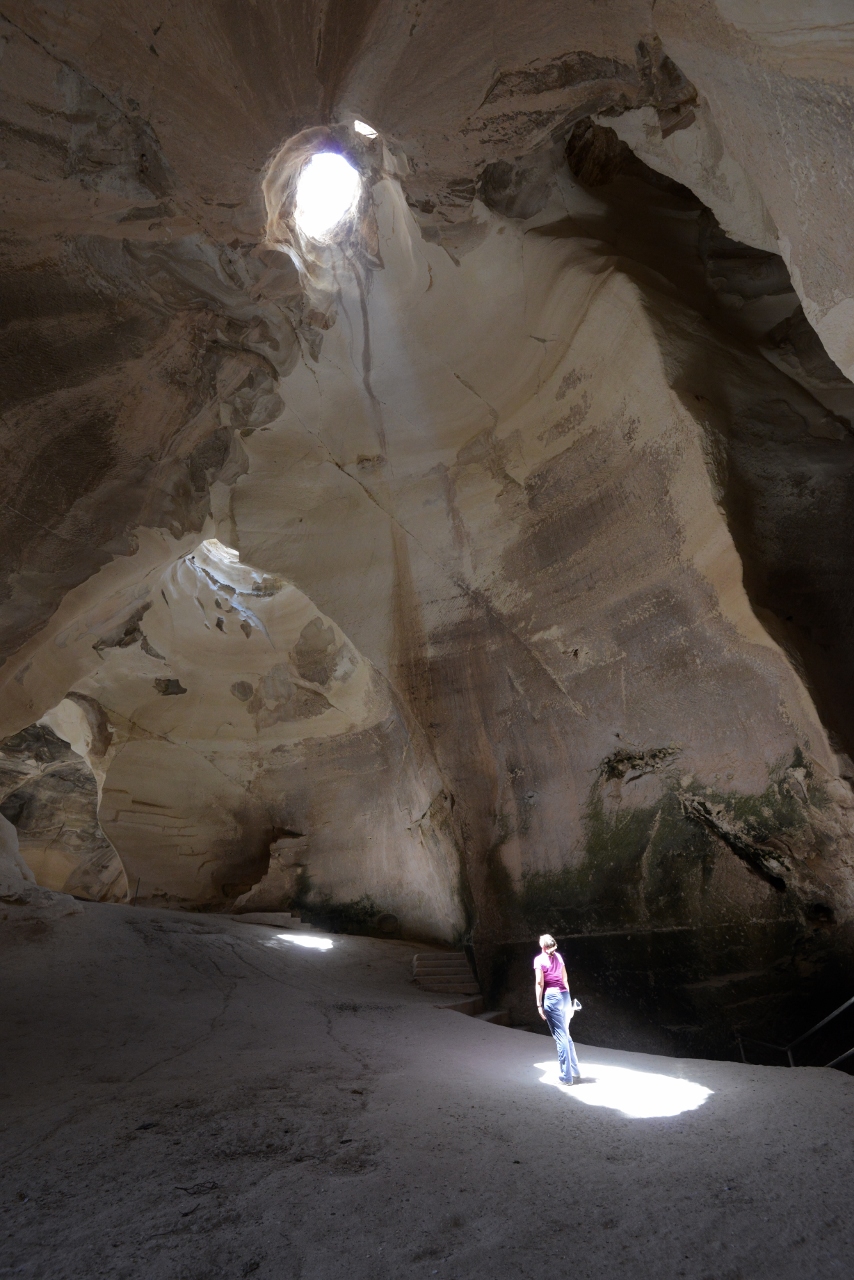
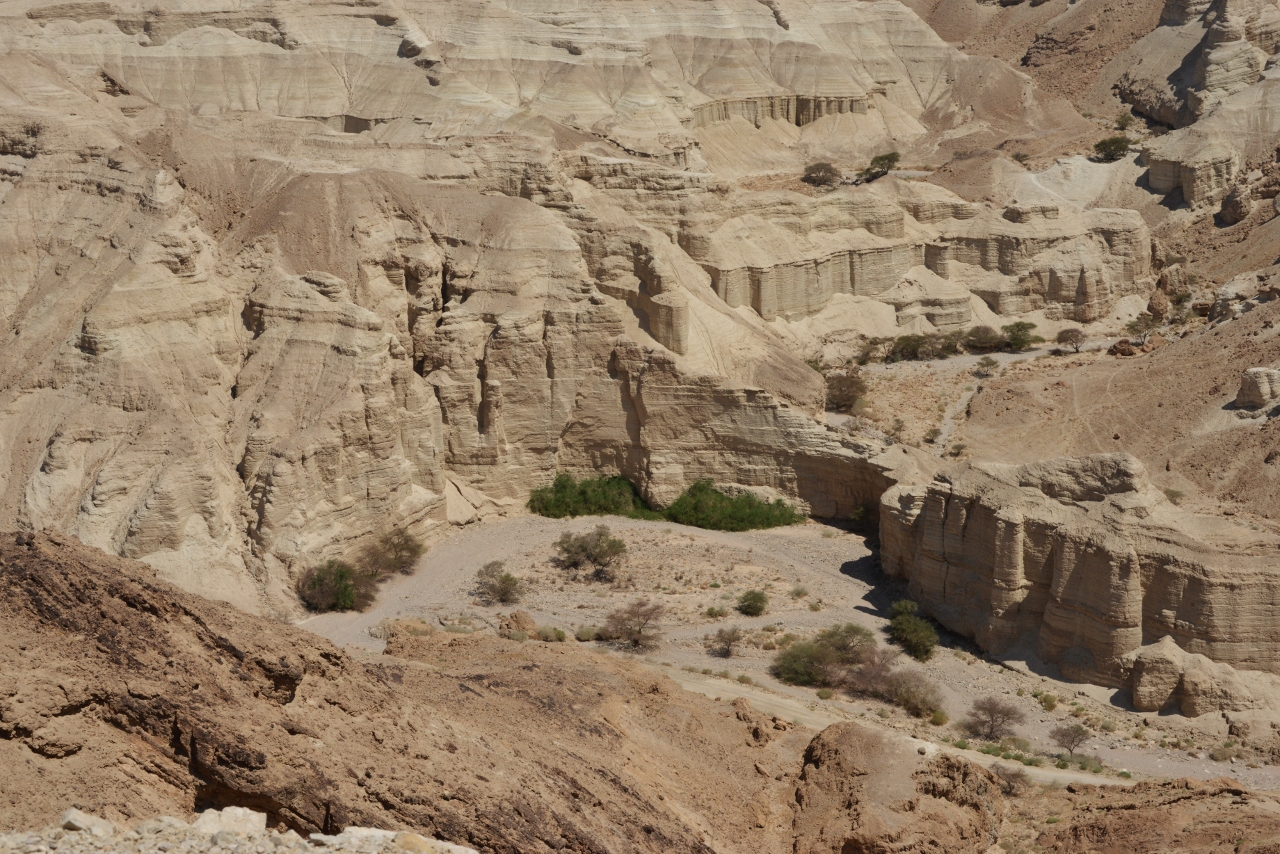
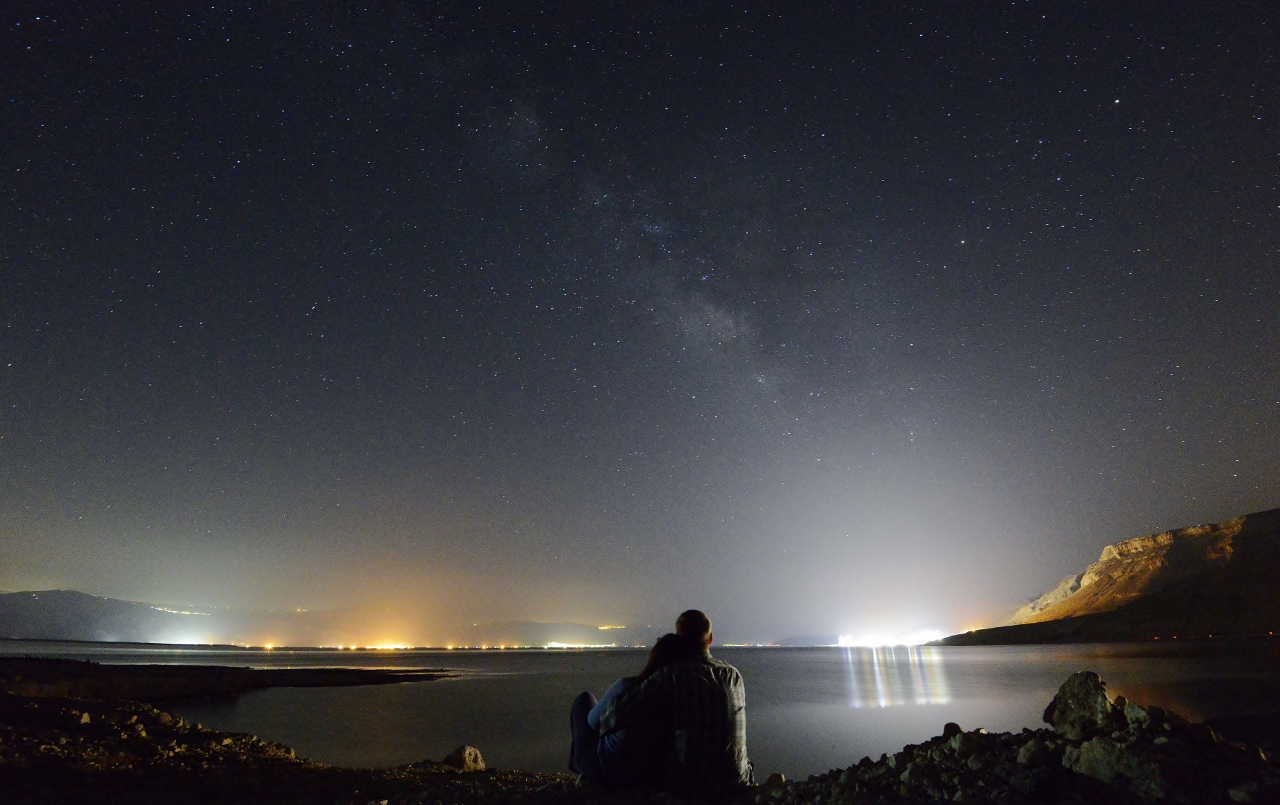
We were surprised by Israel’s natural beauty. We were expecting to see dry/arid/desert countryside and were pleasantly surprised to find forests, fields, and intensive agriculture in many places. We enjoyed some of the local produce like grapes and peaches while being shocked that these items actually grew in Israel. The Dead Sea area was strangely pretty and floating in the Dead Sea was like swimming in a hug. There are many outdoor activities to do in Israel: there are a lot of big hills/small mountains, hiking trails, caves, a few waterfalls, gardens, and lookouts in Israel’s 500, yes 500, parks. It seems people are traveling to Israel to see the religious sights and skip the natural wonders because either there were few people around or we had the places to ourselves. Israel is beautiful and has a lot to offer for people who want to drive around in the countryside and skip big cities altogether, we really enjoyed the natural beauty of Israel!

We were very surprised by security in Israel and the general security environment we encountered. Yes, we knew Israel took security seriously but this was next level. Our first indication things were different came when we tried to get on our flight in Athens. Before we could even get to the check-in counter we were questioned at length by Israeli security staff about our visit to Israel. They asked questions in different ways to see if they’d get similar answers and the most surprising question “yes, you answered you’re going to Israel for tourism, but why?” How do we even answer that!? It’s like they were role-playing a five year old who kept asking “but why?”. All of our personal belongings were removed from our bags and thoroughly inspected. It took an hour before we even made it to the regular security everyone has to go through!

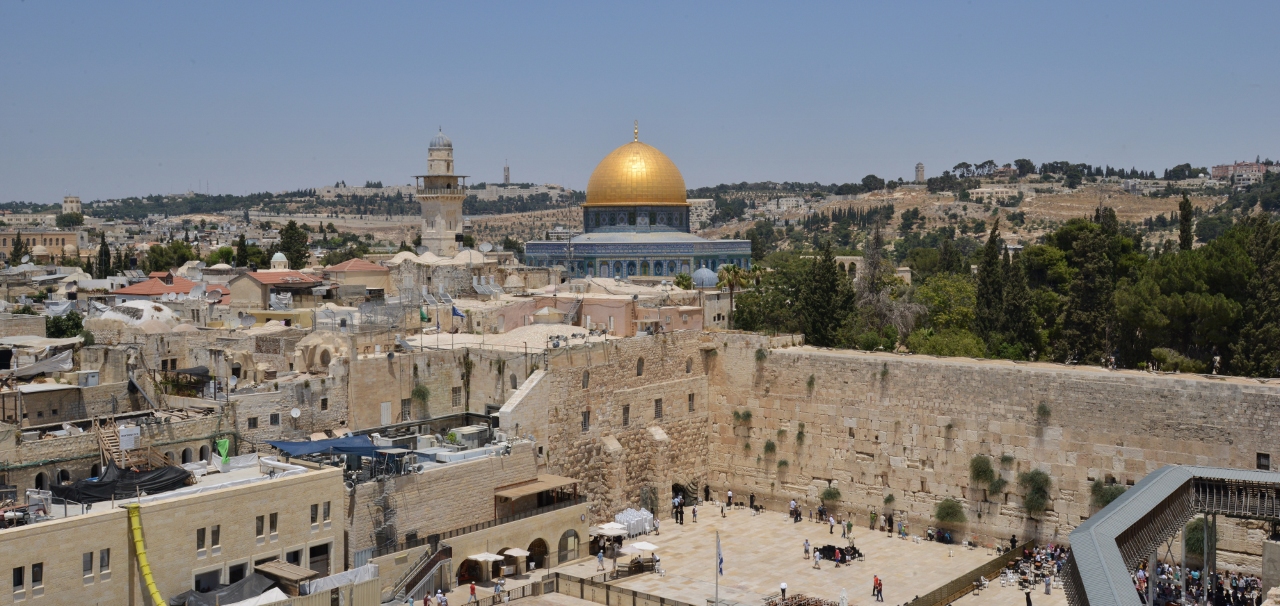
The relics of modern wars gone by are easily found in Israel. While stopping to look over the Sea of Galilee, I noticed signs indicating a nearby minefield. On our way towards the Golan Heights, we passed military installations and drove along even more minefields sectioned off by barbed wire. All of this pales in comparison to our night in Majdal Shams on the Syrian border where we could Syria from our bedroom window. Our awesome Airbnb host, Bahjat, mentioned he sometimes can hear sounds of fighting in Syria. That night, as Jacquelyn and I were trying to go to sleep we could hear pop-pop-pop-pop, boom… boom… boom… of gunfire and explosions. In the morning we said to Bahjat, “we heard some noises…” to which he quickly replied, “SEE!? I said you could hear!”. It was very odd to fall asleep to the sounds of war and Bahjat seemed eerily calm with a war raging nearby. Even touring around Jerusalem it was clear the area was prepared for the worst: the emergency siren sounded when we on a tour and we were herded out of the open towards the walls / cover. We found out a while later it was a test but it was still a surreal experience. We visited an observation deck to look over the Old City of Jerusalem and the man who sold us our tickets had a machine gun. I asked him if the reason why he needed a gun was because tourists get out of line and he just chuckled followed by a serious: “It’s for terrorists. Sounds like tourists but different.”. At least they have a sense of humor about their current environment?

Even though the people of Israel appear to be prepared for war at a moments notice they are still very friendly and welcoming. We seemed meet curious individuals and get dinner invites wherever we went. The best experience was when we were in Majdal Shams and learned all about the Druze and living in the Golan Heights. As Bahjat was showing us around we came across his friend at a family BBQ in a park and we were invited to join. It was a remarkable experience simply because we had no idea who Druze were before we arrived and we had no idea Majdal Shams was so interesting. We thought Majdal Shams was simply a place to sleep during our journey through the north of Israel only to get quite the education and meet lots of friendly people. The rest of our Airbnb hosts would bring us local food to try and always made sure we were happy; it was awesome!

Speaking of local food, there are no Starbucks, no Dunkin Donuts, and McDonalds has outrageously expensive hamburgers because the burgers have to be char grilled and kosher in order to be competitive. Both Starbucks and Dunkin Donuts tried selling in Israel but gave up when they found out that Israeli’s don’t much care for the taste of Starbucks coffee and generally only eat a special type of donut around Hanukah. We heard from multiple people how food they eat overseas, like apples, gyros, etc., are all garbage compared to what they can eat in Israel. Who knew Israeli’s were so particular about food and drinks!? Seriously, the food is awesome.

Really the only downsides were the costs and the heat. Things are expensive in Israel and it felt like the sun was constantly trying to make-out with us. That said, we really enjoyed Israel, there’s a lot to love. We’d definitely come back!

Enjoy the photos!

Chris W.

Transylvania Part Two 2015

The people of Romania and their food are awesome. The tourist places and the scenery are beautiful enough but the combination of the food and the insanely friendly people helped make Romania one of, if not the best, places we’ve traveled. It’s like Romania is one of the best kept secrets for travelers. The combination of what exists in Romania, the people, the food, the scenery, the chill attitude, the ease of access, the tourist places, and the great value, doesn’t really exist anywhere else in the world!

In our travels we are commonly greeted with indifference as we are just another tourist. Very rarely are people genuinely interested in us, what we are doing, where we are going in their country, or spend the time to tell us about themselves and their country. We don’t really mind, people have their lives and they are busy, no big deal. Sometimes, like in Australia and Japan, we find a ton of awesome people willing to talk to us and share their lives and culture with us. This makes a destination go from good to amazing and makes our time in the country unforgettable. We’ve had a lot of great experiences with a lot of people but there’s a few that stand out for different reasons.

I had mentioned we spent a lot of time trespassing because tourist places would be closed when they were supposed to be open or we simply found a place where we wanted to visit and couldn’t find anyone to let us in. If we were caught no one would care and sometimes we’d just get asked to leave. If we found out there was an admission fee we’d offer to pay. We’re not total criminals after all :). In one instance we set off a burglar alarm. In the US that’s sign to make a quick getaway but people are so chill in Romania we figured we’d wait to find out who would show up to turn off the alarm and see what happens. After about five minutes of the alarm ringing a five foot flat, 80 year old, woman, who walked with a limp responded to the alarm. We quickly figured out she didn’t speak English so I used the translate app to tell her we were sorry for setting off the alarm and we are tourists from America. She then grabbed our arms and brought us to her home next door, picked up the phone, and called someone. After handing the phone to Jacquelyn, we figured out she had called her granddaughter who spoke impeccable English. The granddaughter said her grandmother asked her to take us on a tour and that she’d be there in a few minutes. The granddaughter spent about two hours with us touring around and then brought us  back to her grandmother who had cooked us supper during the tour! When everything was said and done we had taken around four hours of these people’s lives and we offered to give them money for the food and the tour. In typical Romanian fashion, it was a simple “no” with the explanation that they love their home area and they were so happy we were able to tour and share in their culture. I’ve trespassed a lot of places and I’ve been banned from a lot of places for trespassing, like my hometown mall, this is the best outcome I’ve ever had while trespassing!

Romanian people love to talk. People off the street would ask us how we like Romania, where we are from, how things are going, whether or not we like Romania and so on. There was never a shortage of people who wanted to talk to us. We had a very long train ride across Romania and we ended up in a cabin with six other people. The people were curious who we were but no one spoke English. They all looked at us and said, “Duetsch?”, “English?”, and saidsome other countries. I replied, “USA, America”. They all went, “ohhhh!!!”. Not many Americans make it to Romania for tourism, only around 200k/yr, and the part of Romania we were going to had very few tourist in general so an American going to that area was pretty uncommon. The train ride was really hot so I went out of our cabin and stood next to an open window in the hallway for the last five hours of the ride. The different folks in the cabin would come up to me and just stand with me, say a few words of Romanian here and there, offer me drinks and snacks, and then go back to the cabin. We were going through the Carpathian mountains so it was insanely beautiful – it seemed they all knew the word ‘beautiful’ so I probably said that word no less than 100 times to the different people who kept me company. One person tried to organize a taxi to our hotel for us, one person offered me whiskey shots, one person helped us carry all of our baggage off the train at our destination, and another person walked us down the street until we saw our hotel just to make sure we ended up safely to our destination. It was such an unexpected and awesome experience!

There are some problems in Romania: Romania has some tough demographic trends. To start, Romania’s average income is in the $500-$600/mo range in the bigger cities and in the villages/rural areas it’s much lower. This means a lot of people live well below the US minimum wage; a lot of people are very poor. Many people leave Romania for greener pastures, one person told us Romania’s greatest export is their youth which made sense why there were not a lot of youth around. When driving through rural towns we’d see people in their 50s+ and school age children but nothing in between. Once we’d go to bigger cities with universities we’d find more people around our age. Romania’s population is shrinking: they lost 12% of their population through emigration in the last 10 years, of the 19million people left only five million work so a rather small minority of people are supporting the retirees, the individuals unable to work, and themselves. Almost all the people we met around our age wanted to leave Romania and since Romania is part of the EU they can easily move to a more prosperous place.

On top of the unfavorable demographic trends, everyone we met seemed to despise their government. One particular Airbnb host stands out: she was in her 50s and lived through communism. After communism she became a successful entrepreneur employing multiple people and winning business awards. Her house was very big and she alluded to having many vehicles in the past and doing very well financially with her business. Through a series of events that I do not entirely understand due the language barrier, the government ended up shutting down her business and confiscated her assets like her cars. She was also accused of bribery/kickbacks and was investigated but was cleared of any wrongdoing. This happened over three years ago and when she told the story tears still came to her eyes. She said, “I lived eight years as a worker in communism and 25 years in capitalism. We are going the wrong direction.” She’s actively looking to leave Romania for good. Her story was crazy to hear and something unimaginable for us.

We met quite a few people starting their new careers in tourism. We heard time and time again how people have a hard time getting paid from their work or it takes forever to get paid so people are turning to tourism, like owning and running a hotel or becoming tour guides, because tourists pay when they arrive or when they leave – no lag. We met an engineer who became a tourist guide in Alba Iulia for the huge citadel in the city. In any Western European country Alba Iulia Citadel would be listed as a “must do” destination and be a jewel of tourism but in Romania it’s kind of sort of visited by some people because a lot of people, like us, have a hard time finding places to visit. We didn’t know about Alba Iulia prior to a few days before our visit but once we did learn about it we wanted to visit and we wanted to hire a guide for a more enriching experience. There weren’t many guide options and the only one listed on TripAdvisor never responded to phone calls or emails. We still decided to visit, pulled up to the citadel and saw a sign for guide service. We called the number, stated we wanted a tour starting immediately and he said he was available. It’s not like he ran a company with many guides, he was the company! We ended up having a great tour and learned a lot about Romania, it was awesome! The lack of tourism has really benefited us in lots of way in Romania, places aren’t busy, guides are available, and things aren’t that expensive yet. That said, hopefully many more people come to Romania for tourism and hopefully people’s lives will improve as tourists spend money.

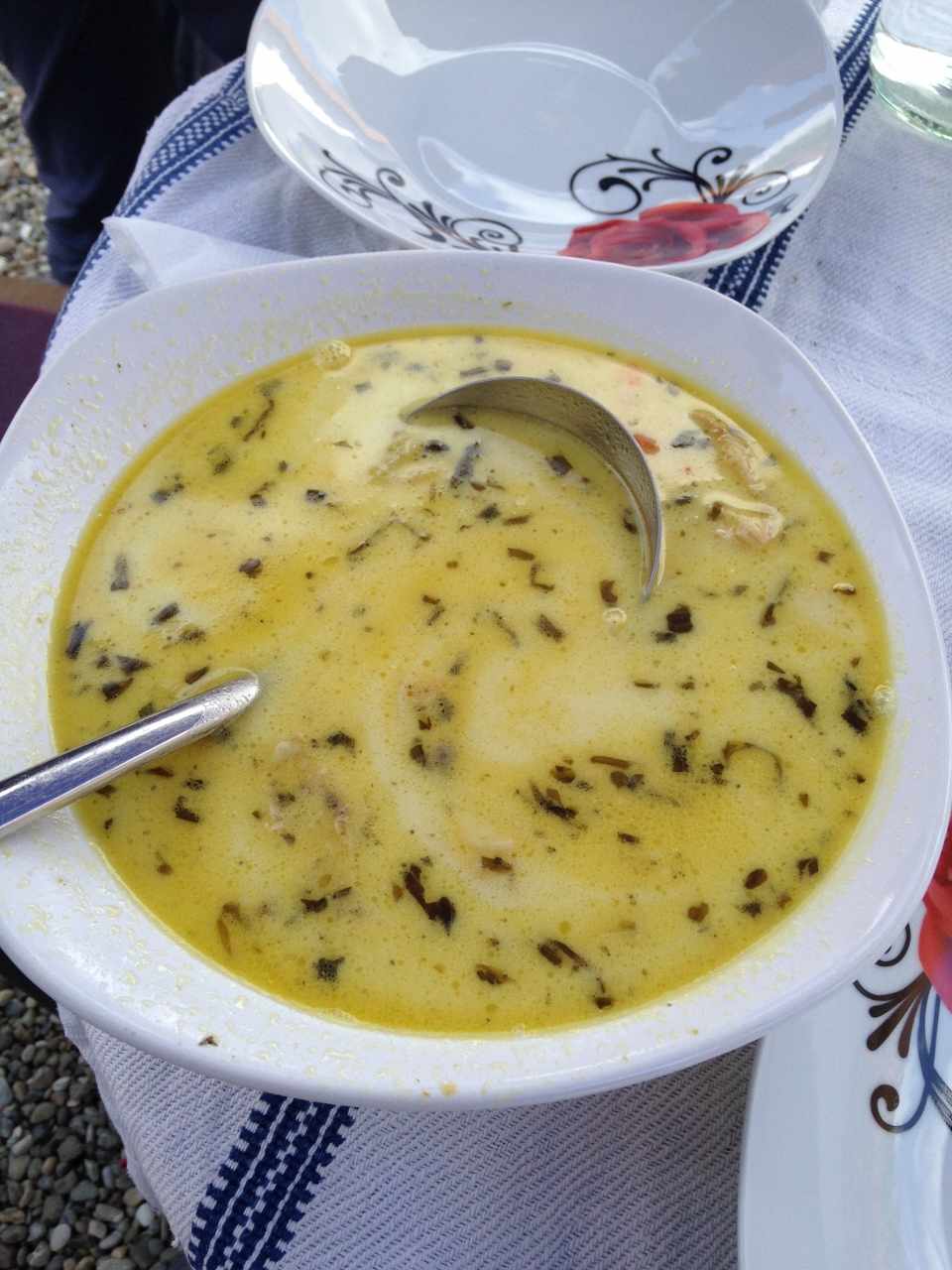
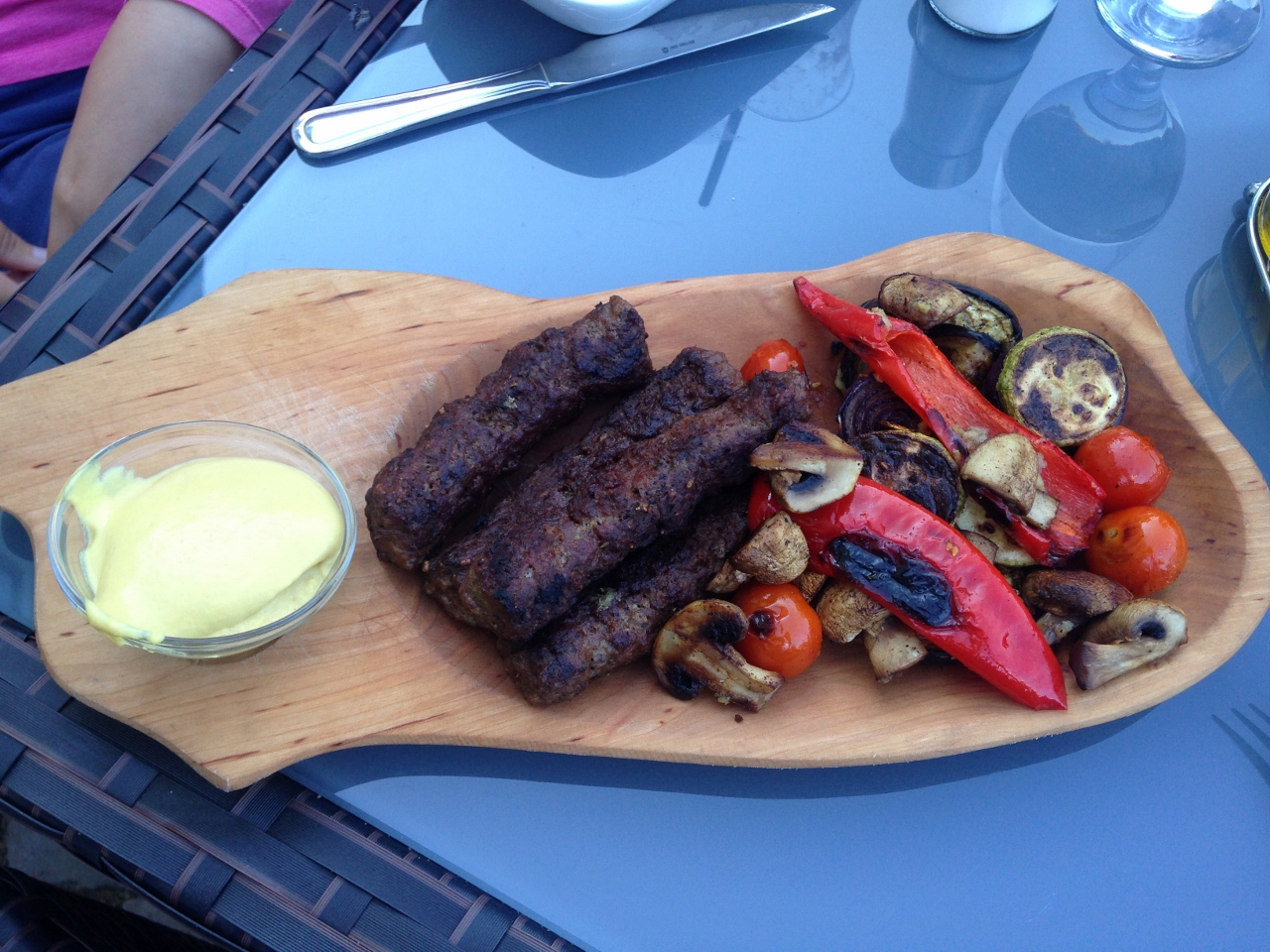
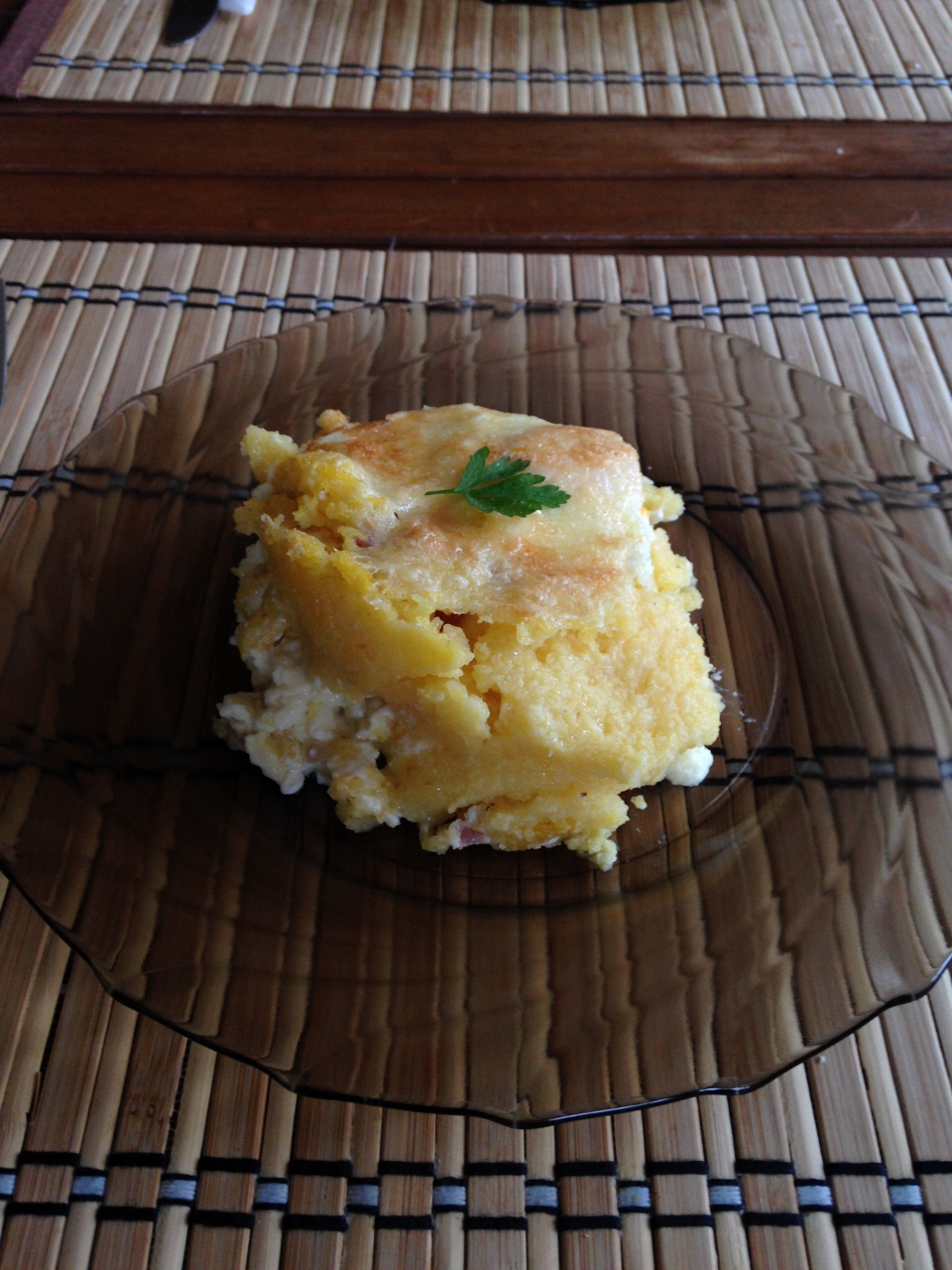
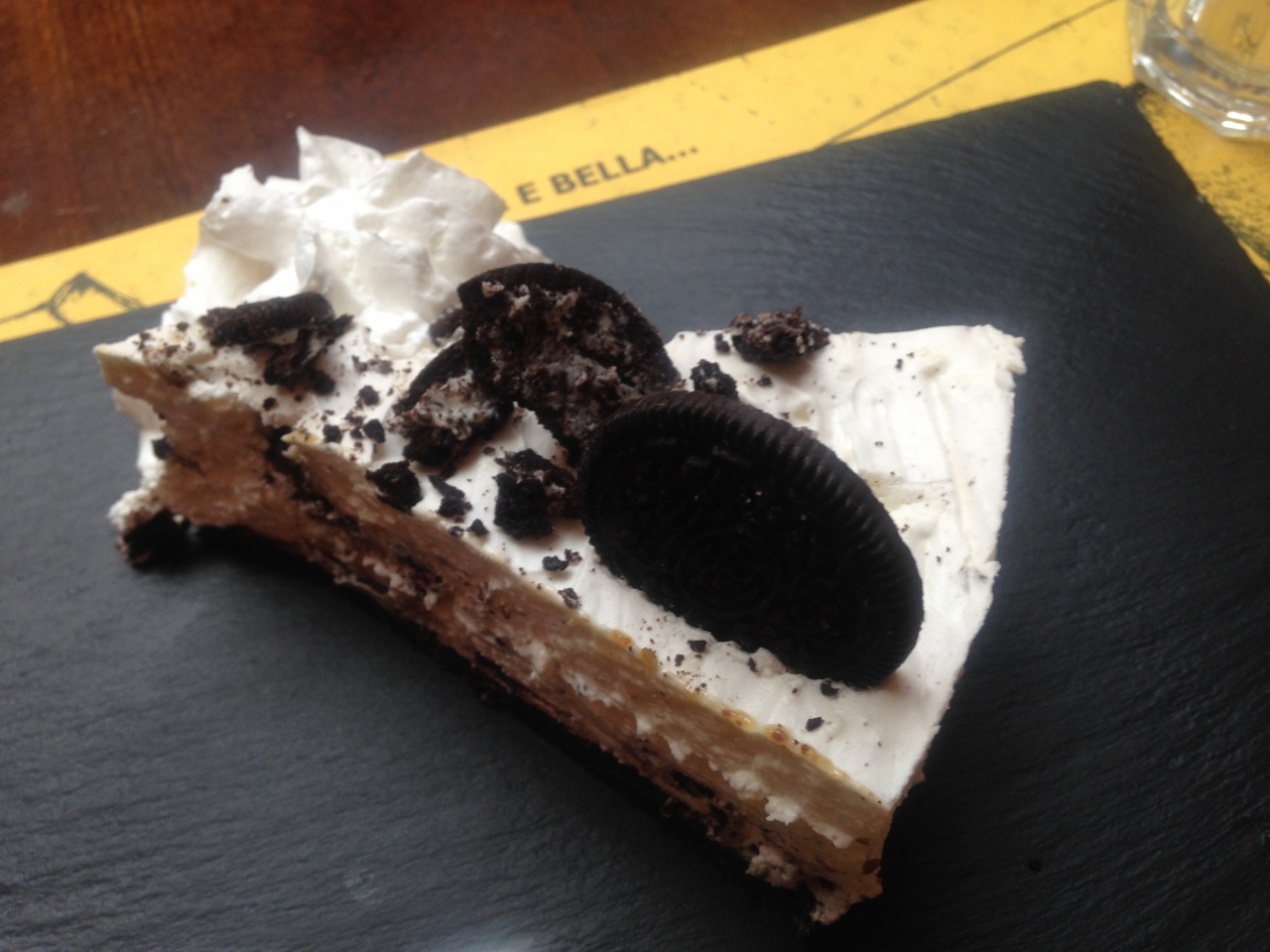
The food in Romania is delicious. Pretty much everyone has a vegetable garden and makes their own alcohols and sweets. The food is a lot like what had back in the US: lots of meat, soups, breads, and spices we are familiar with. But the combination of fresh ingredients, cooking from scratch, subtle yet dynamic flavors, and great care help make Romanian food stand out. Romanians are really good at making sweets like pies and cakes.  There is one dessert, called papanasi, that really stands out. It’s a super soft cheese baked into a donut looking thing served with a sweet cream and berries. Everyone has their own version of the recipe but in all cases it is absolutely delicious!

We stayed at a very small hotel in the middle of nowhere for a couple of days where the hosts lived in the same building. In the morning our host asked us what we wanted for dinner. I had no idea so I just stared at him. After an awkward pause and my blank expression, he asked if we wanted a traditional Romanian dinner and grew a huge smile after I said “sure”.  His wife was the cook and the food turned out absolutely delicious! It was here we learned the typical Romanian meal is a soup, bread, a main dish, and a dessert. People make food and drinks from all sorts of things growing off the land. When we stayed in the mountains we had a host who made jams and alcohols from the mountain berries he picked every year. We also found people who would pick elderflowers growing in the mountains and make a slightly fermented drink like  7Up but way better. It seems as though people could take almost anything and make great food!

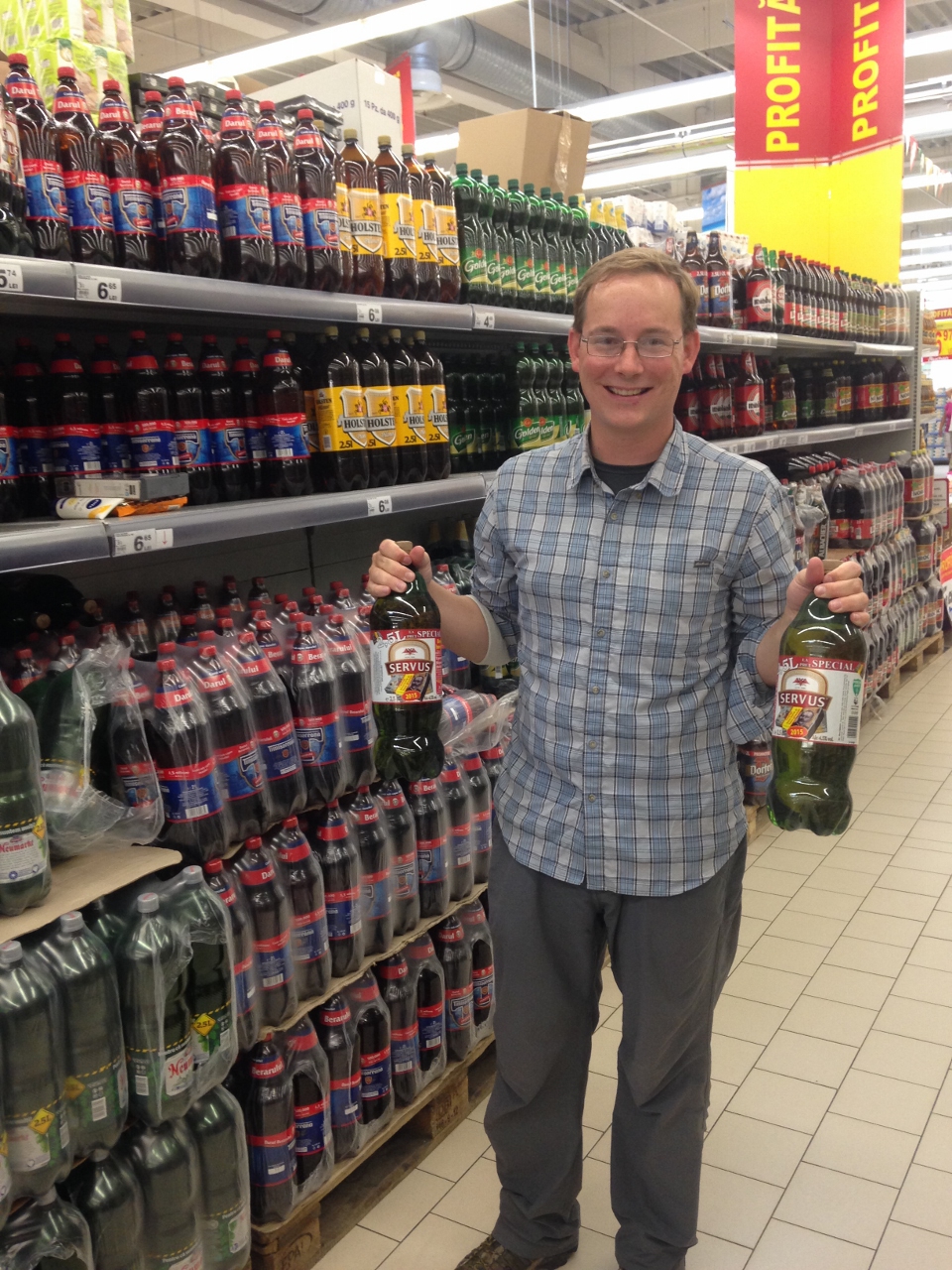
Alcohol is a very good value in Romania. Romania makes some amazing wine and pretty good beer. We saw lots of fruit trees and vineyards while driving around but the most surprising thing we saw were HUGE hops farms in the countryside. I think that is what helps keep prices low for alcohol. We don’t drink a lot of wine so we don’t really know good wine but the good news was wine was cheap enough to buy a handful of different types, try them, and then dump them out if we didn’t like the wine. I’m really not sure how anyone makes money on a $2 bottle of wine but that’s not my problem to solve :). Beer was equally cheap. We could buy 2/3rds gallon bottles of beer for about a buck fifty. That’s Franzia cheap

I can’t really think of any bad experiences we’ve had in Romania. I think the worst thing that happened was the occasional rain but that’s not Romania’s fault. We really forward to the day we get to come back. We’re not done yet, we still have a couple more stops in the country and we’re not excited to leave. Romania is too awesome :).

Enjoy the photos!

Chris W.

Transylvania Part One 2015

Our time in Transylvania has been amazing. Even though we’ve been here for two weeks it seems like we just scratched the surface. This area has made a very lasting impression on us and the combination of what we found in Transylvania doesn’t really exist anywhere else in the world. The beautiful scenery, outdoor activities, awesome people, good food, chill demeanor, historical sights, ease of access to the things we want to do, and great values make Transylvania the most under-rated place we’ve ever visited. There is a lot I want to share so I’m going to break this up into two posts. #1 The easy stuff: scenery, tourism industry, and driving in Transylvania. #2 The amazing experiences we’ve had with the people of Transylvania and the delicious food they make. I’m still working on #2 so that’ll come sometime later.

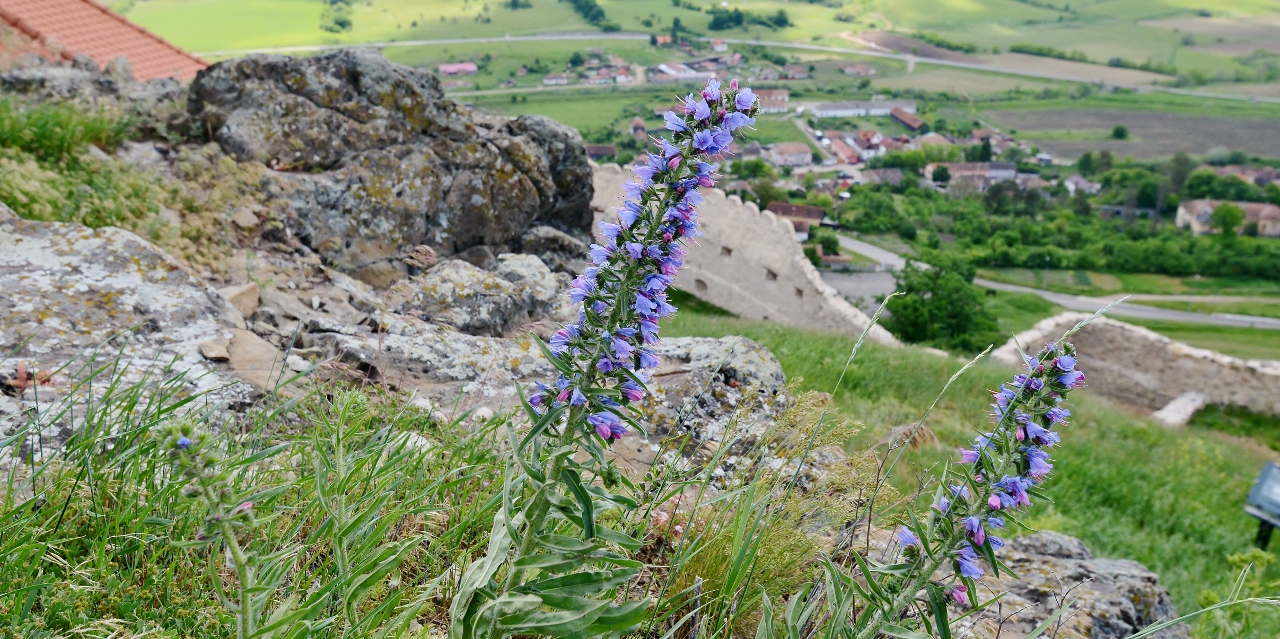
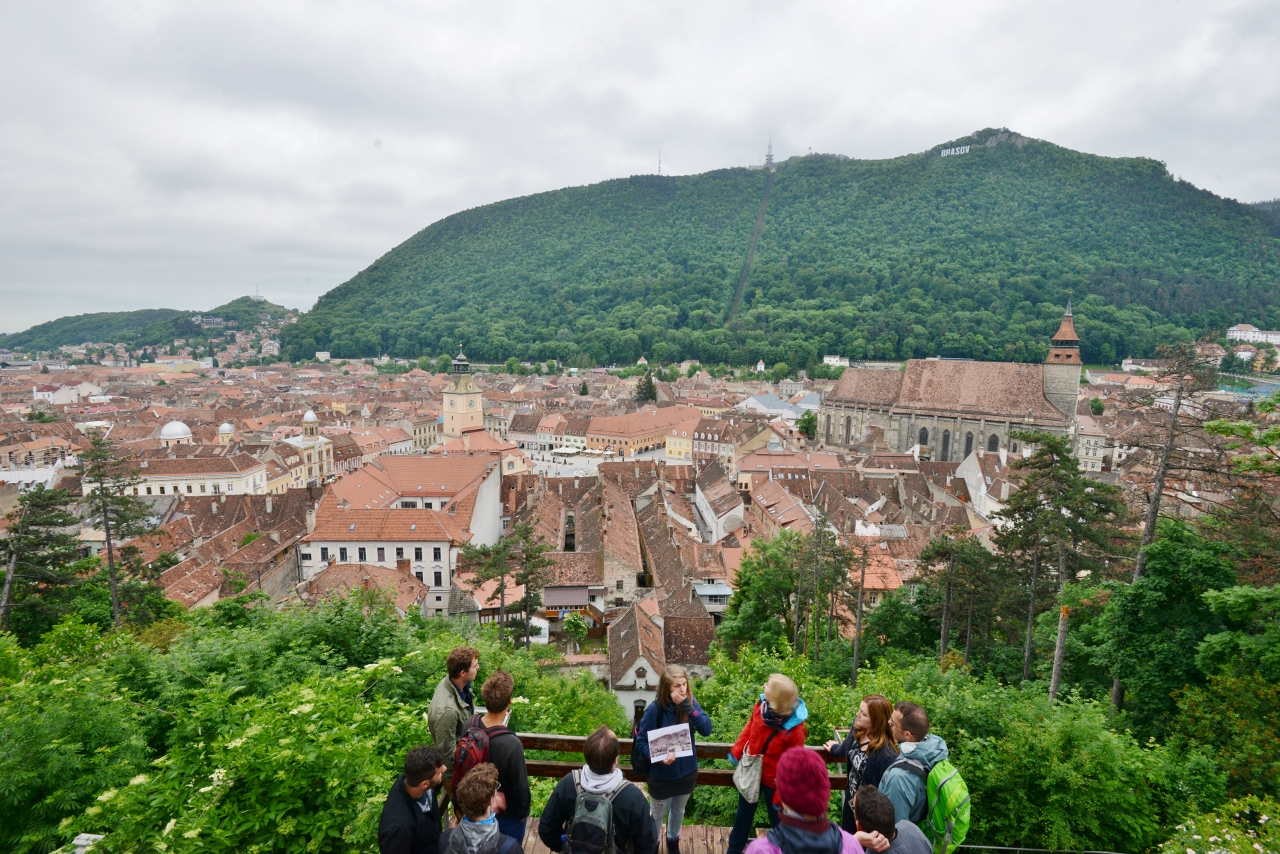
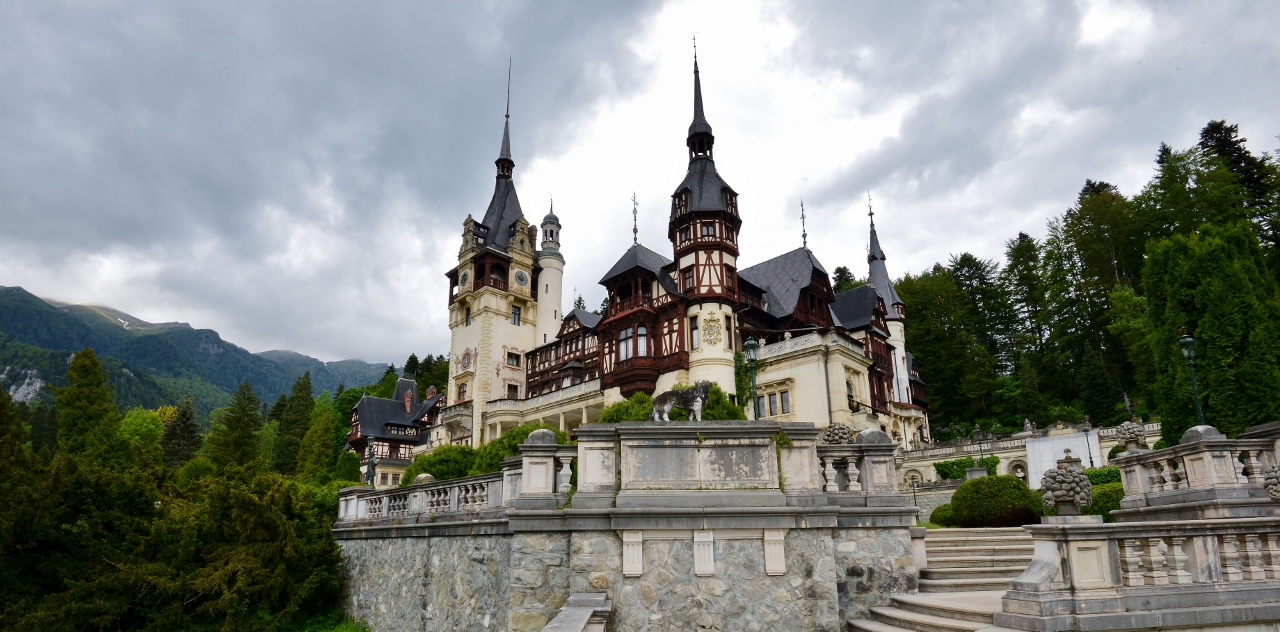
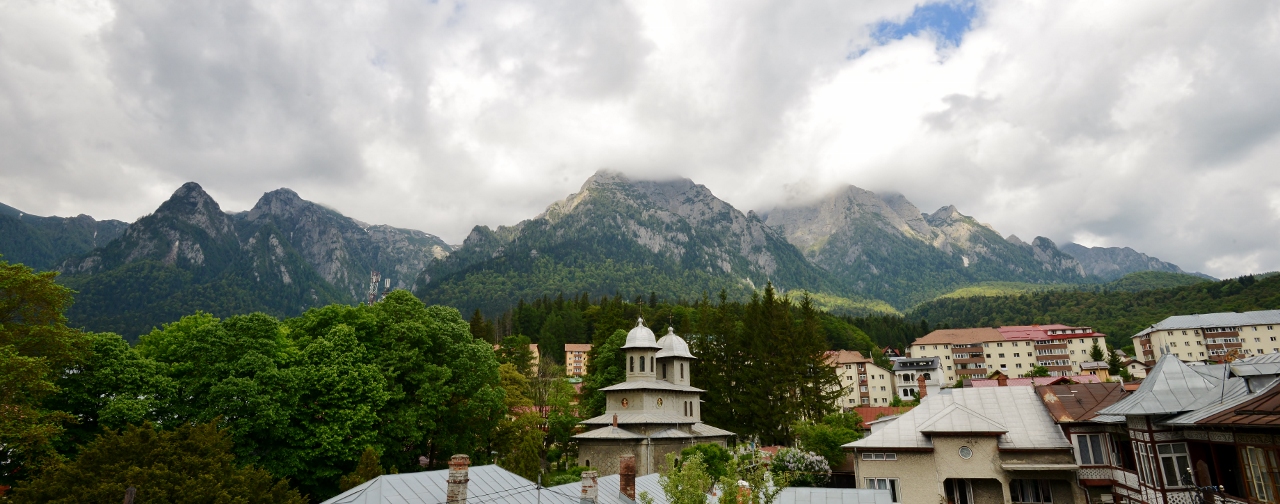
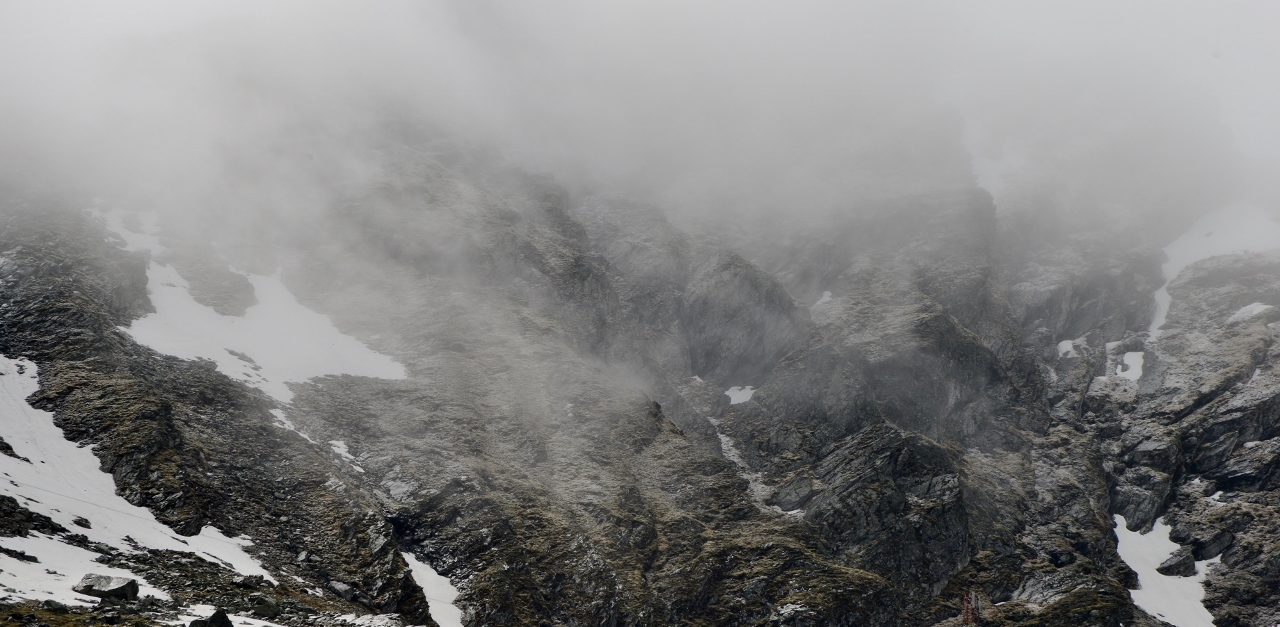
First things first: it wasn’t easy figuring out what to see in Transylvania. Normally, if someone wants to tour a European country the first thing they should do is find Rick Steve’s materials on the country. We were surprised to find Rick Steve’s doesn’t have a guide for Romania and even recommended people skip Romania. The next thing we turned to was TripAdvisor only to find there wasn’t a lot listed. The places that were listed didn’t have a whole lot of reviews and the descriptions of the places were pretty poor. Sites like the Lonely Planet and Wikitravel didn’t help much either. We’ve never encountered a dearth of information like this so we made our own itinerary and figured we’d see at least one cool thing during our two week drive through Transylvania. We ended up being completely surprised by how many things there were to do, how much fun the sites were and, best of all, we pretty much had the tourist places to ourselves because there isn’t a huge tourism scene. We knew Romania had mountains but we had no idea it had so many mountains and with the largest continuous forest in Central Europe. Transylvania has some very stunning scenery. It was really easy to find outdoor activities to do and it didn’t take a whole lot of work to see jaw-dropping beauty. I put some photos up and they really speak for themselves – Romania is very beautiful.

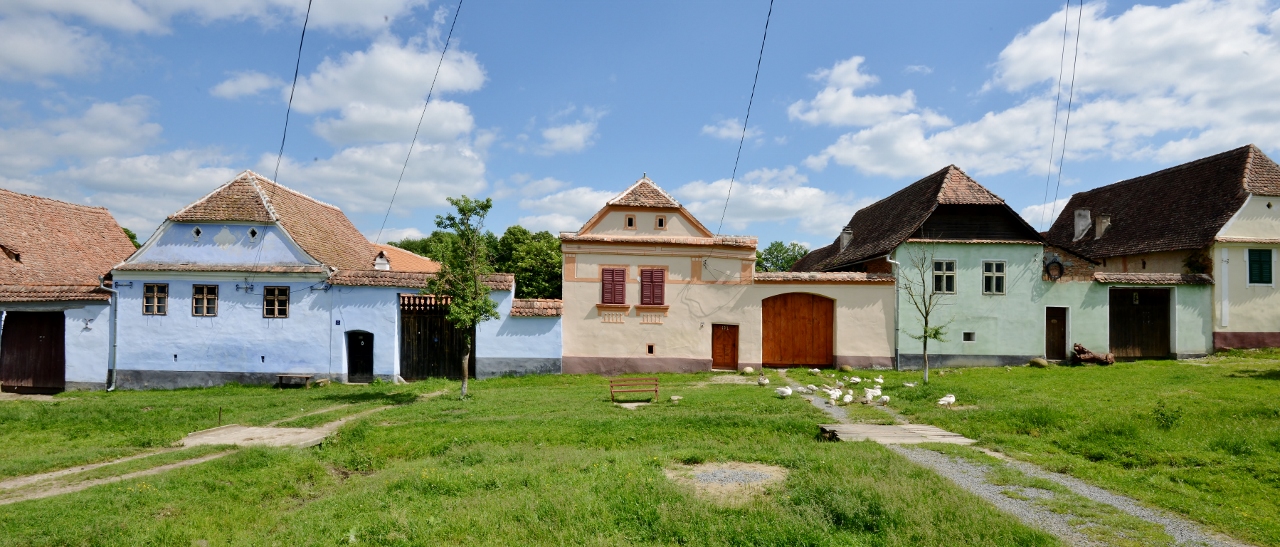
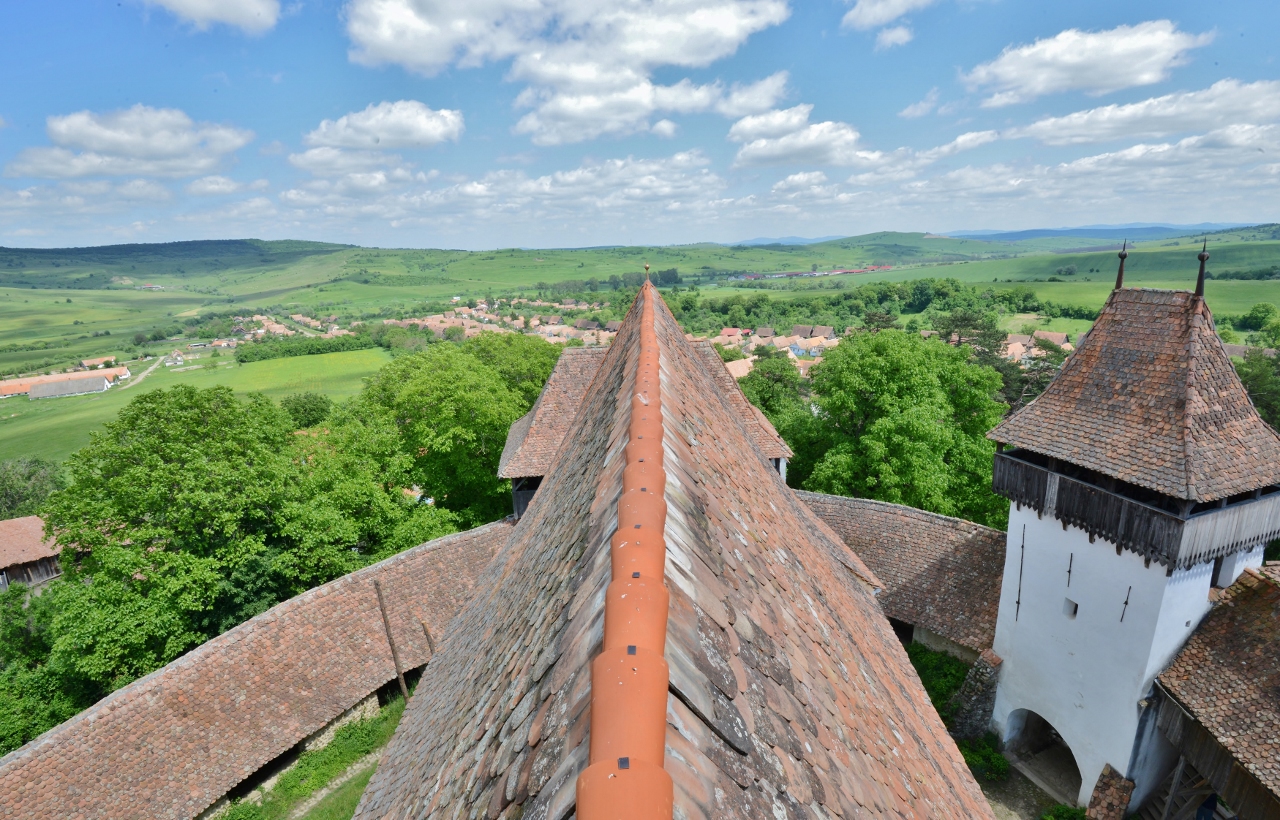
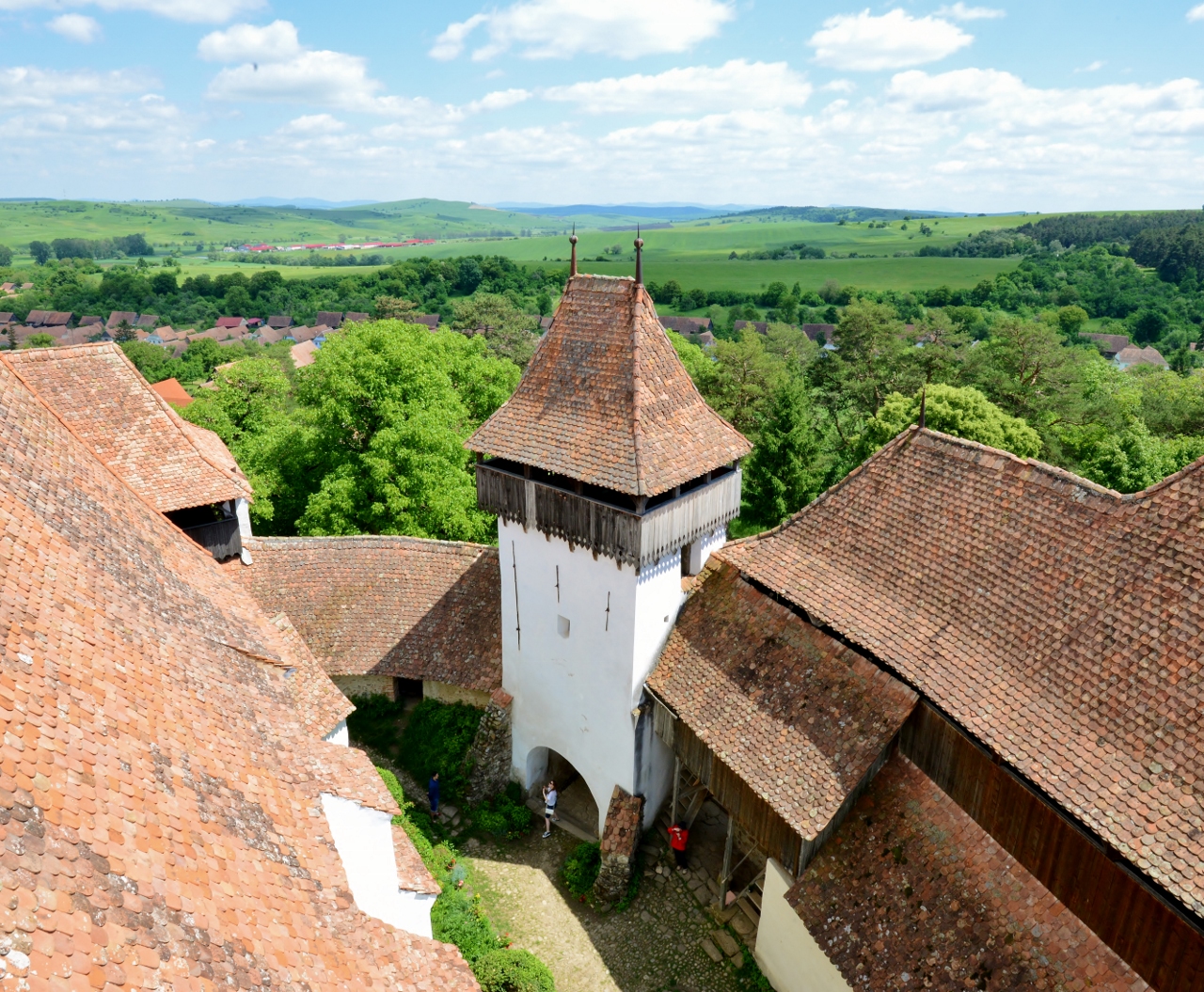
Romania has a rich history of being conquered, subjugated, and passed around by outside forces going back thousands of years. Romania, as we know it today, didn’t exist until after World War One. Because of this, there are a lot of fortifications all over the place dating back to Roman times and even some villages have churches with very large fortifications. A lot of the sites we visited were at some stage of refurbishment, it seemed like everything was under construction. We learned that a lot of EU money and tourist money is being used to make the tourist sites better, which is good, because a lot of historical sites are pretty dumpy and only some are in great condition. There was a huge positive benefit of the dumpiness: we could pretty much wander around anywhere, open doors, peek in everything, and thoroughly explore everywhere, and there were very few “fun police” running around ruining our time. This is pretty different than most tourist sites we’ve visited around the world. We also spent a lot of time trespassing because sites would be closed when they were supposed to be open or we were just interested in visiting. Unlike other places in the world, no one ran us off and no one seemed to get mad! People were generally happy to see us when we were trespassing. After setting off an alarm in one building, we were welcomed with open arms and later given dinner – but that’s a story for part two .

Since we didn’t find a lot of information about what to visit, we’d always ask people for recommendations on what to see during our visit. Almost always people would bring up a salt mine near Turda. We had read about it and planned on visiting it, but it was surprising so many people thought a salt mine was cool. It had its own aura with the locals, the salt mine would come up in conversation and people would pause and say something like, “Oh yes, it’s a very good place. You must go.” So the day arrives and we visit; I never thought a salt mine would be cool but it was awesome! The salt mine had been turned into a mini amusement park complete with a Ferris wheel, mini-golf, pool tables, bowling, row boats, and tons of areas to sit around and chill. Salt crystals were growing everywhere on everything, even the air was salty. Every so often I’d lick my lips and taste salt! It was a really cool visit!

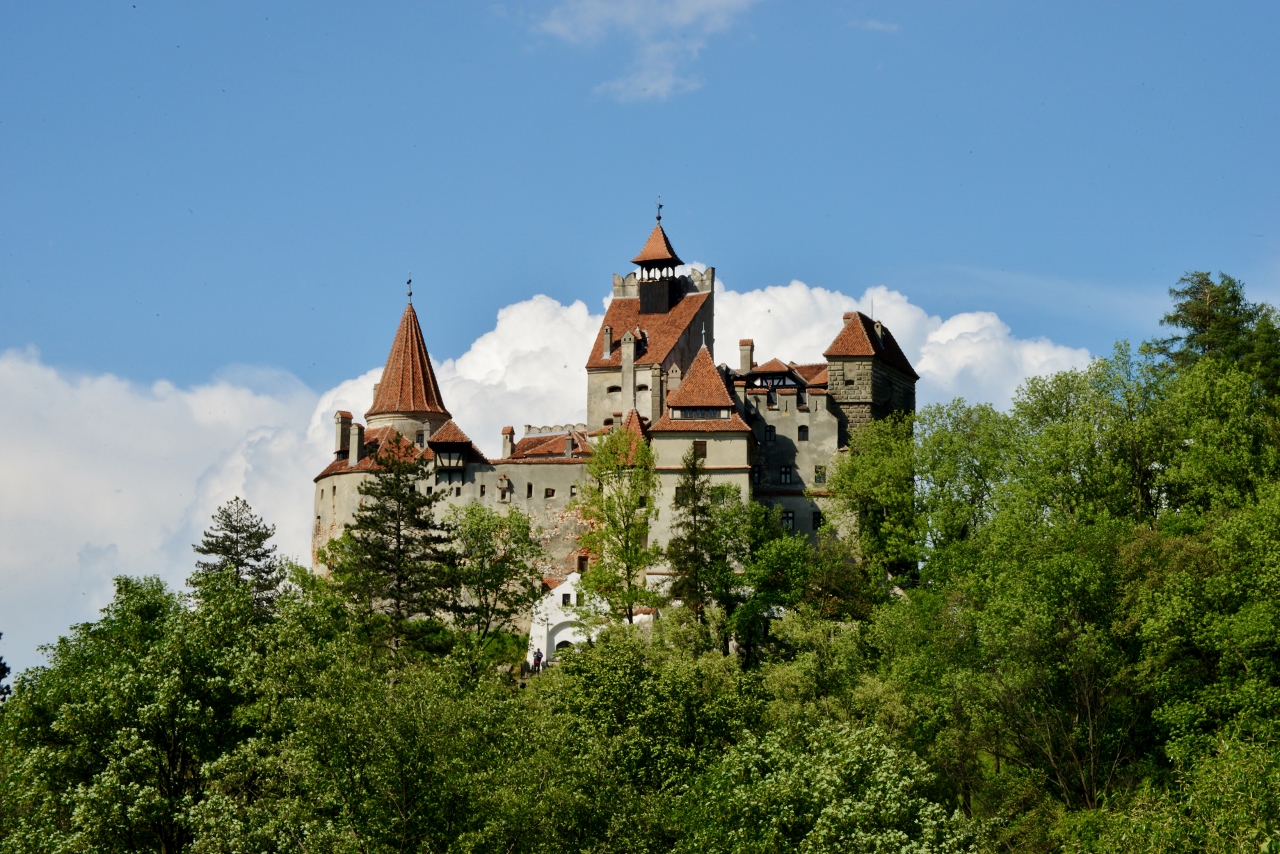
The cost is right for tourism. Most tourist attractions were generally$2-$3 per person to visit, some were free, and the very few ‘expensive’ places, like Bran Castle, were only $7-$10. It was amazing we could go to so many places and see such cool stuff for so little money. In more expensive countries we generally have to choose what we want to do and make some type of judgement call on what we want to see. Not in Romania, we could visit everything! Food, lodging, rental cars, etc., were all pretty reasonable too. We could go out and have a very good three course meal with drinks and desert for $15-$20. That’s a very good deal!

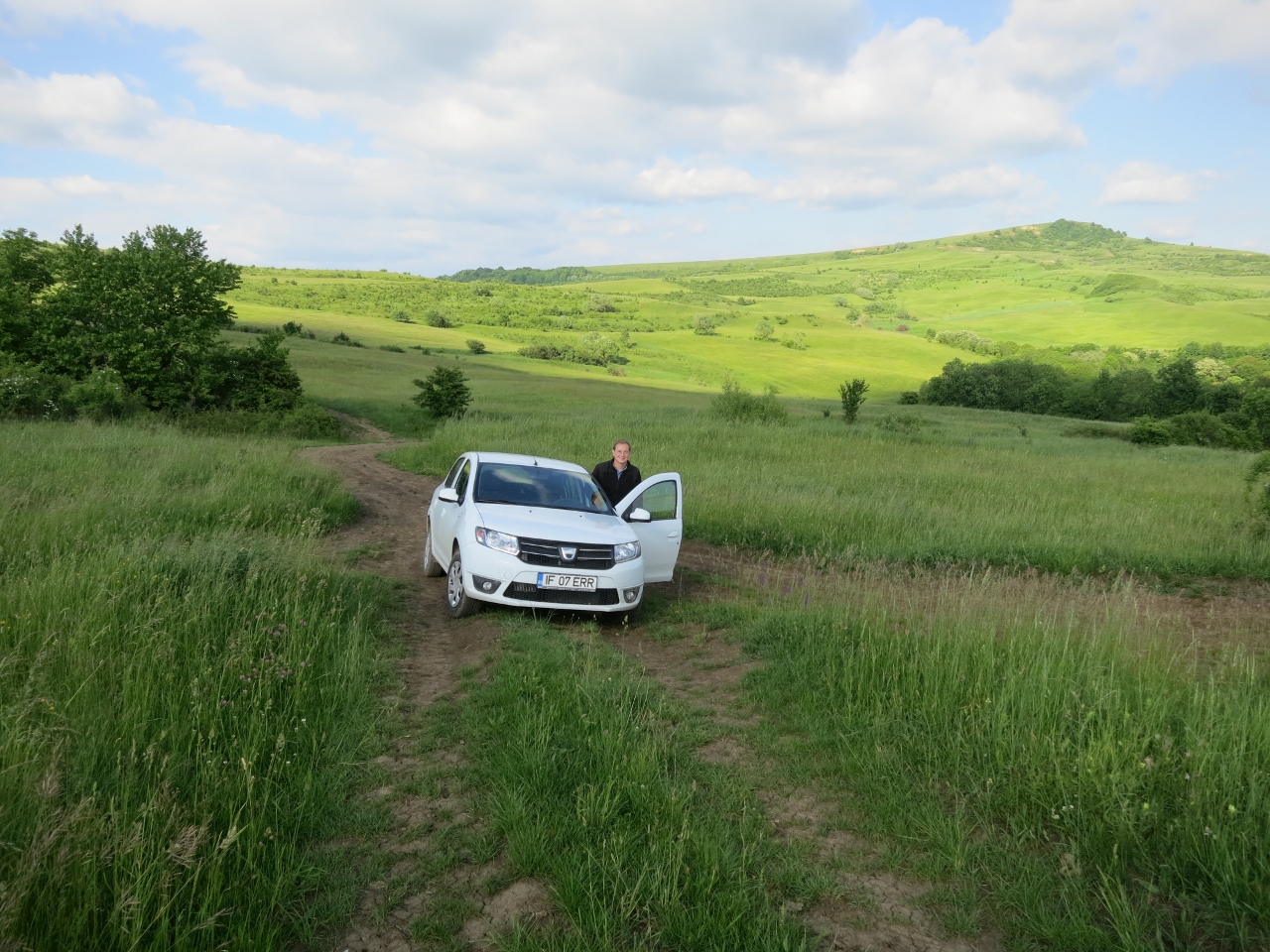
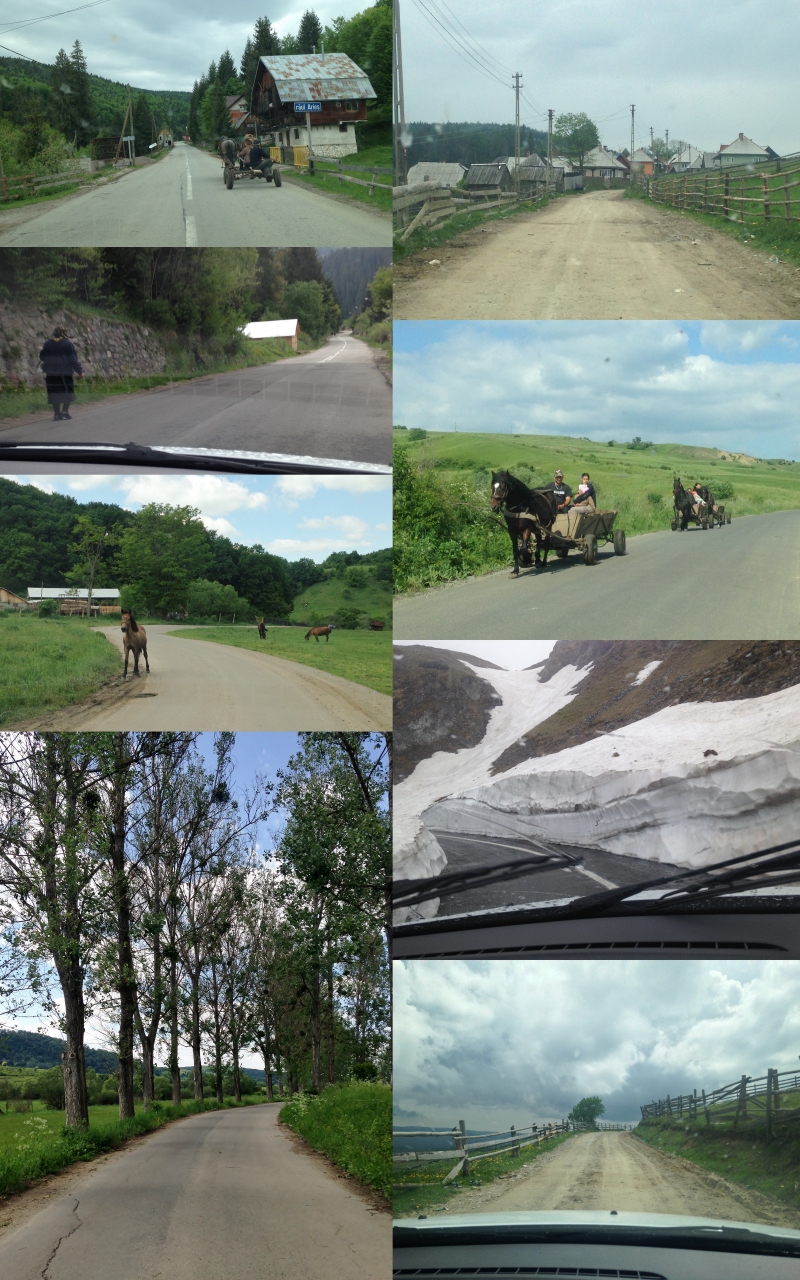
The biggest downside for a tourist had to be getting around. Driving in Romania is insane. The bigger cities are filled with seemingly suicidal drivers and the countryside is filled with dirt roads in bad condition. In the first five minutes with our rental car, I discovered our horn was disconnected. After the first day of driving I told Jacquelyn that we should be prepared to pay for damages for our rental car because there’s no way the car was coming back unscathed. The crap mountain roads, extremely narrow streets, and everyone trying to drive over us was terrifying! That said, I’m thankful for two things which came in very helpful in Transylvania: 1) spending endless hours driving on the gravel back roads of the Black Hills during high school really taught me how to make decent time on crap roads, 2) driving in Albany, NY and Chicago for a year taught me how to deal with super bad and super crazy drivers. We ended up being completely fine and even returned the rental car in one rather muddy piece. These two experiences helped make sure we stayed on the road, didn’t hit anything, and nothing hit us!

So the scenery, the tourist sites, and the trip through Romania was awesome. Even if we hadn’t spoken to a single person in the country, Romania would still be near the top of our list of favorite countries we’ve visited. The unique and extremely awesome part of our trip occurred from all the interactions we’ve had with others and I’ll write about that later!

Enjoy the photos!

Chris W.

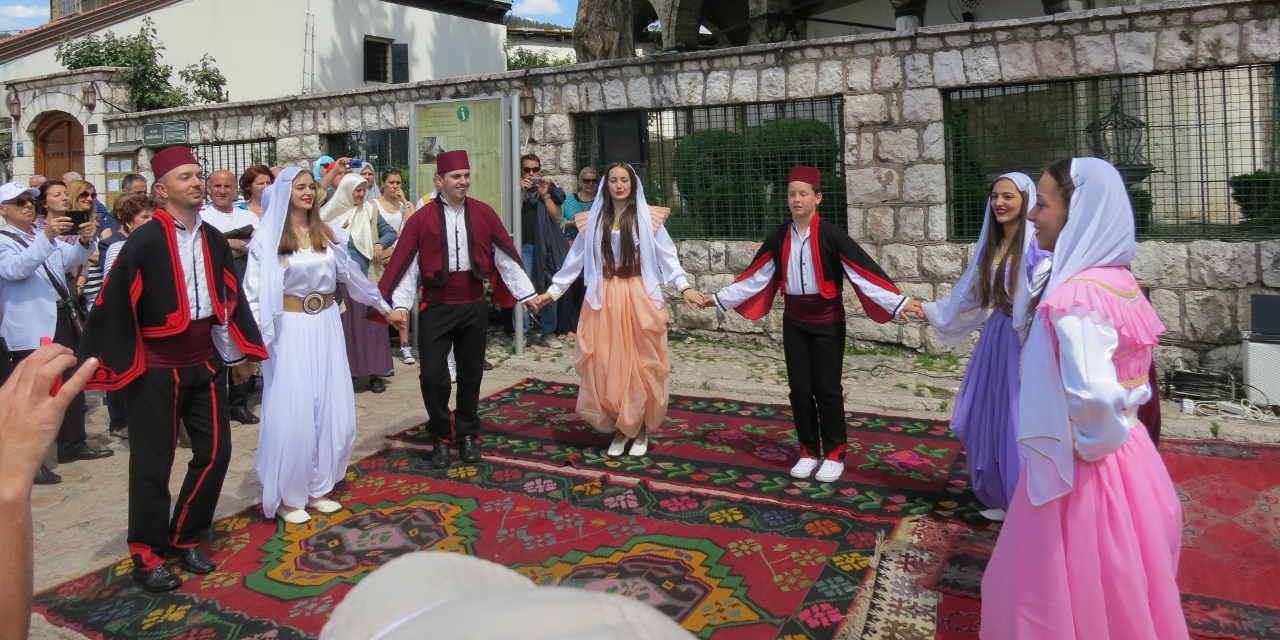
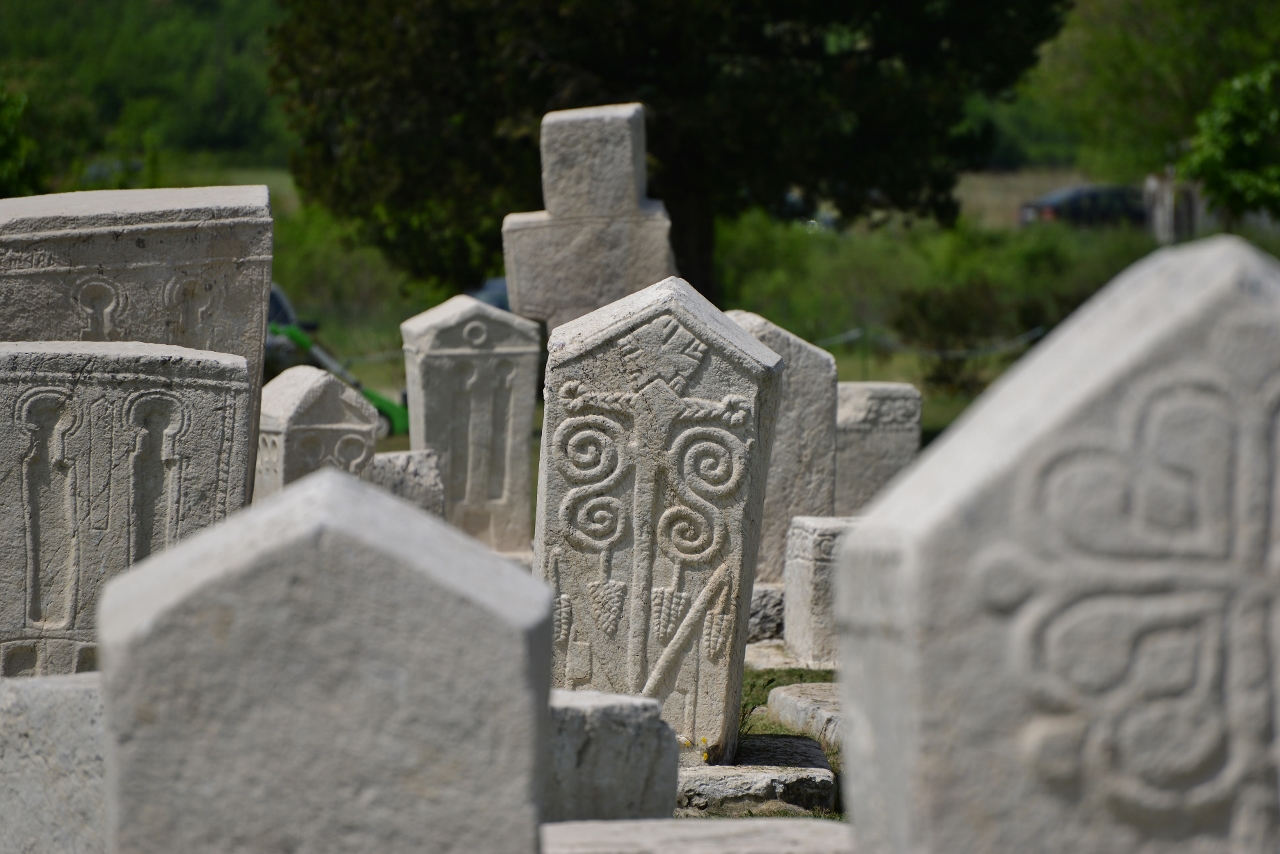
Bosnia and Herzegovina 2015

I’ve had a hard time writing about Bosnia and Herzegovina. It is a place unlike anywhere we’ve visited and it is a place nearly impossible to describe, much like Japan, but for very different reasons. So what I wrote is really long because I couldn’t figure out how to make it shorter; our time in Bosnia left quite the impression on us. If you don’t want to read everything here are the cliff notes: it was fun, we would go back, and Bosnia is a uniquely weird place.

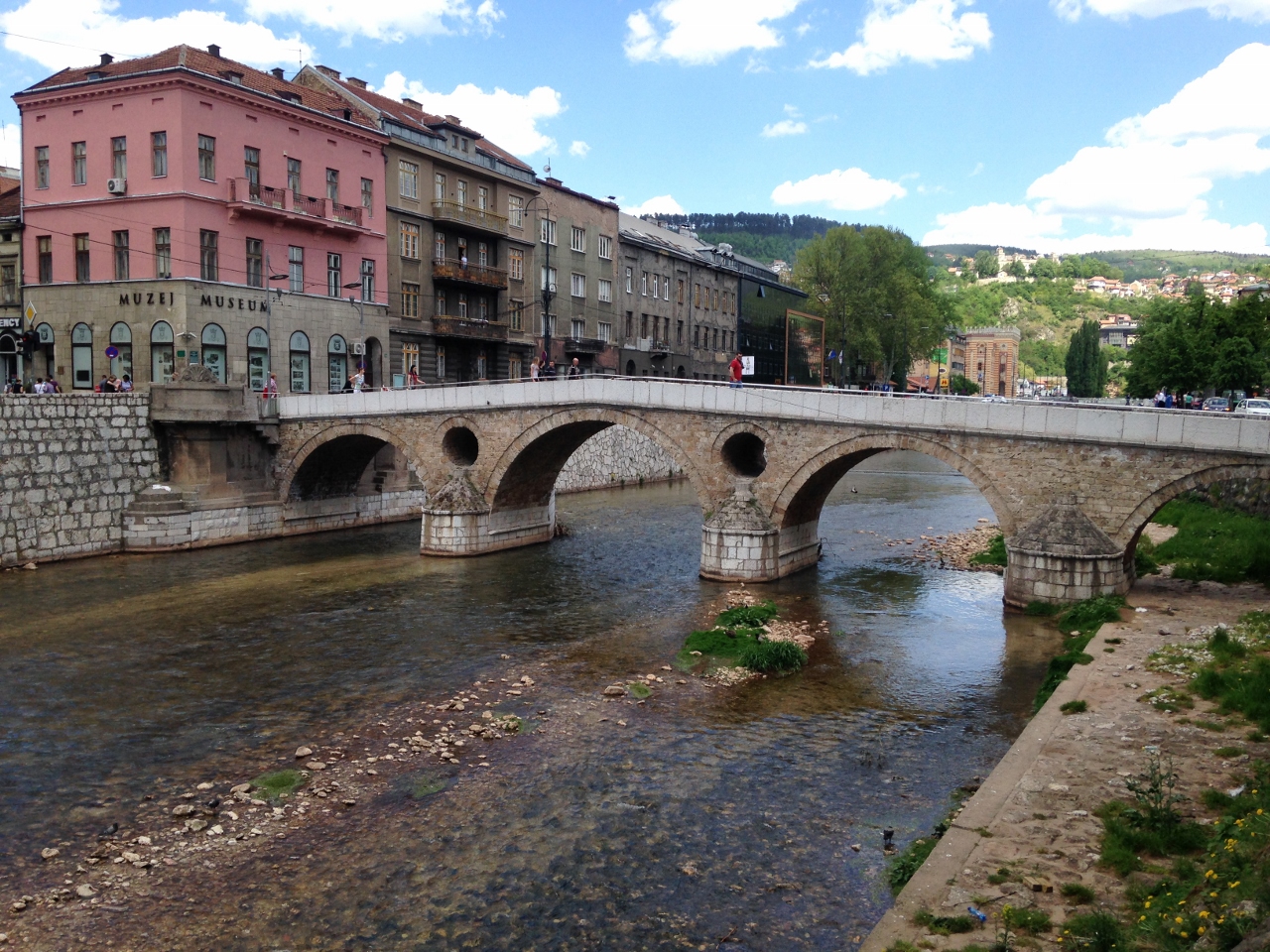
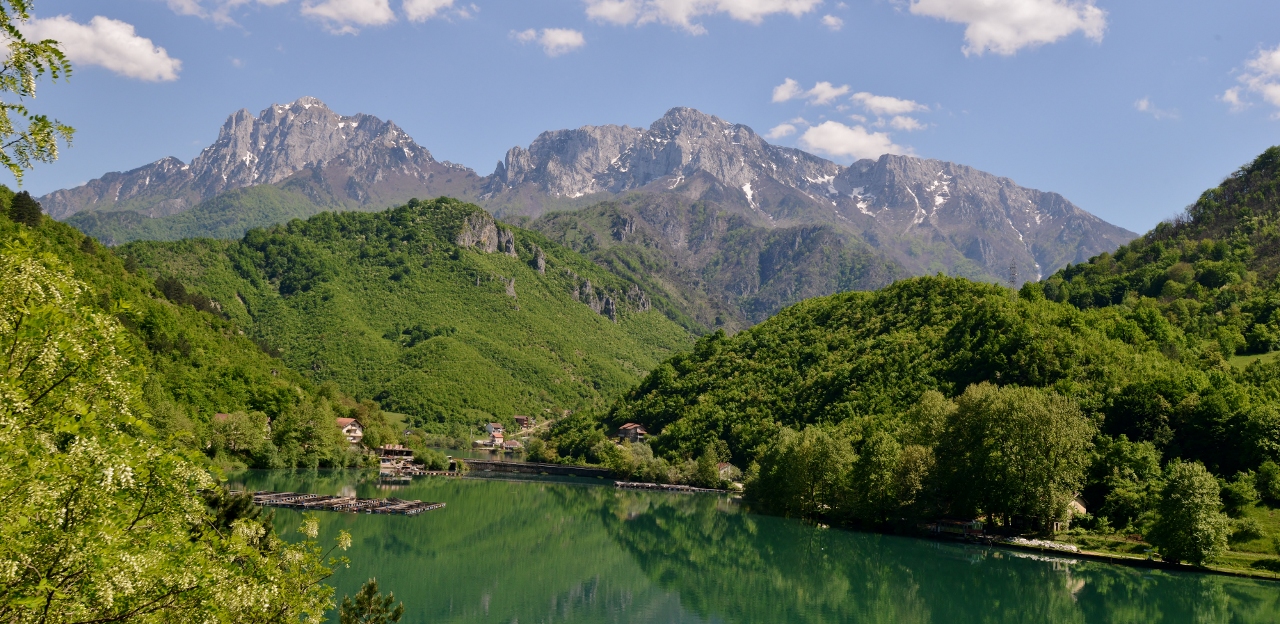
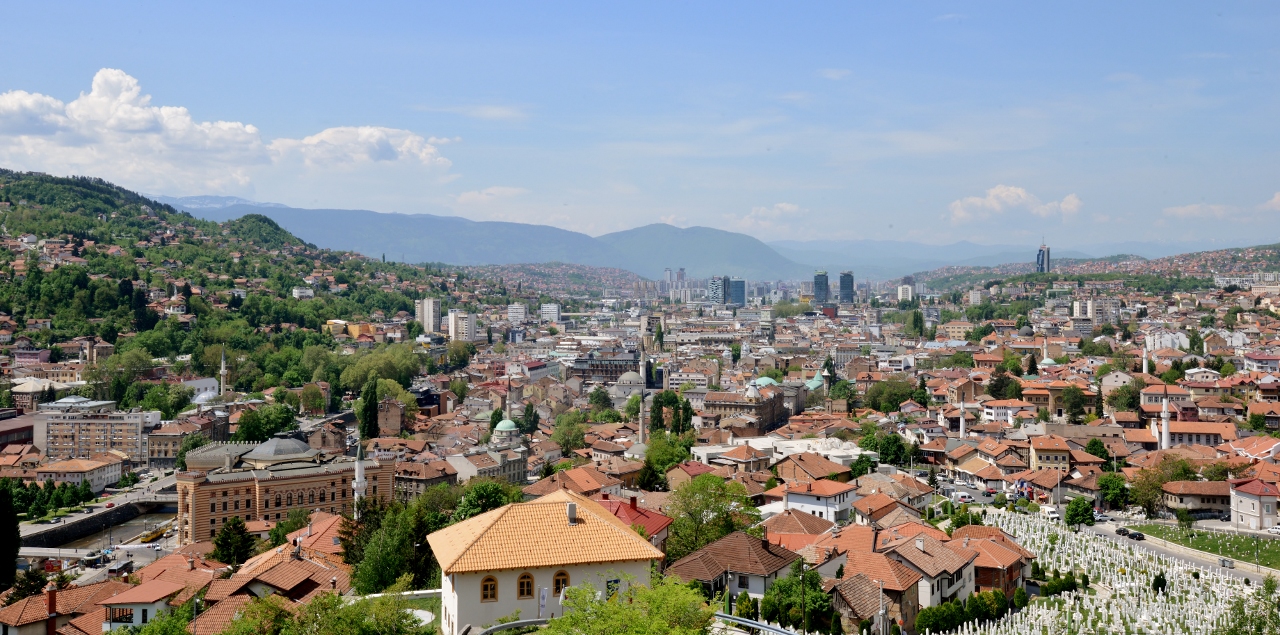
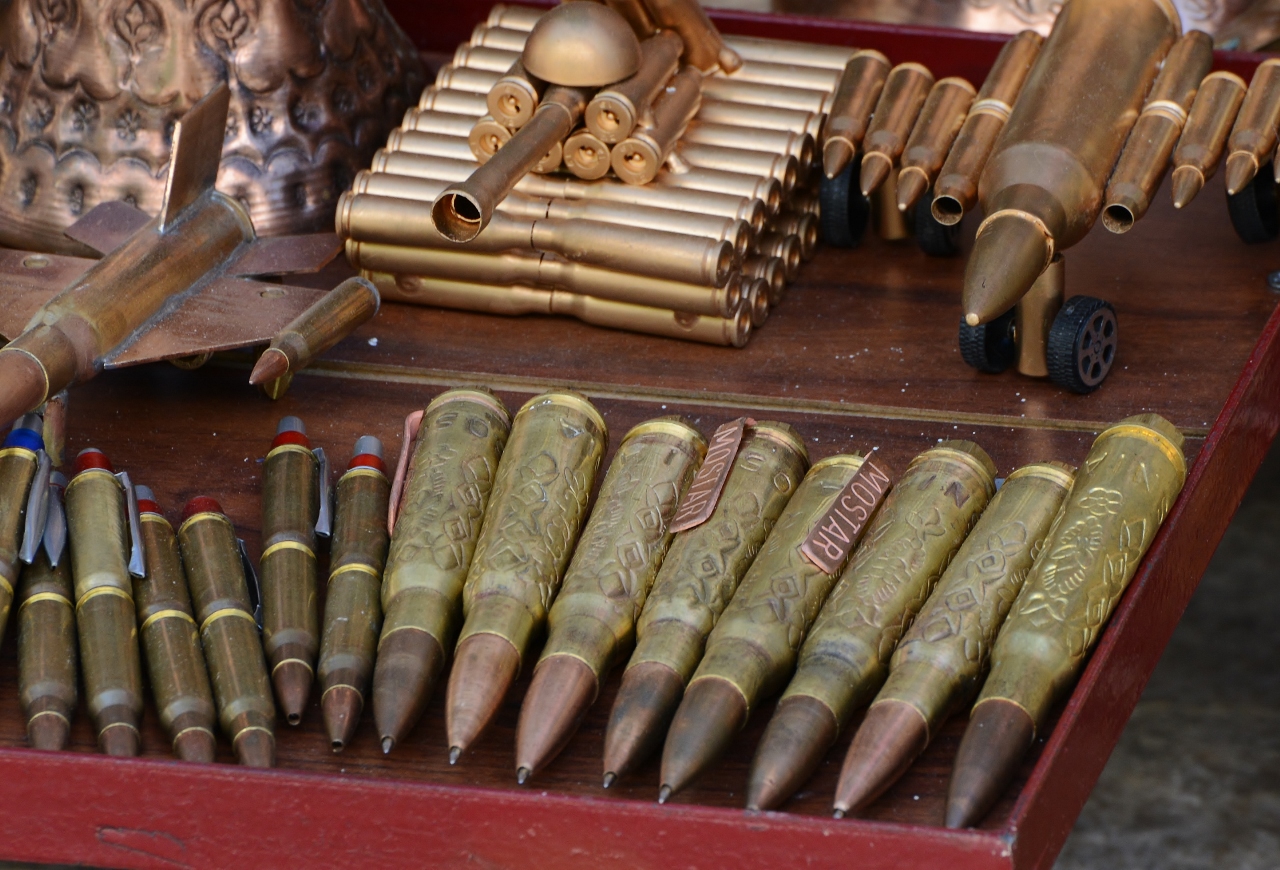
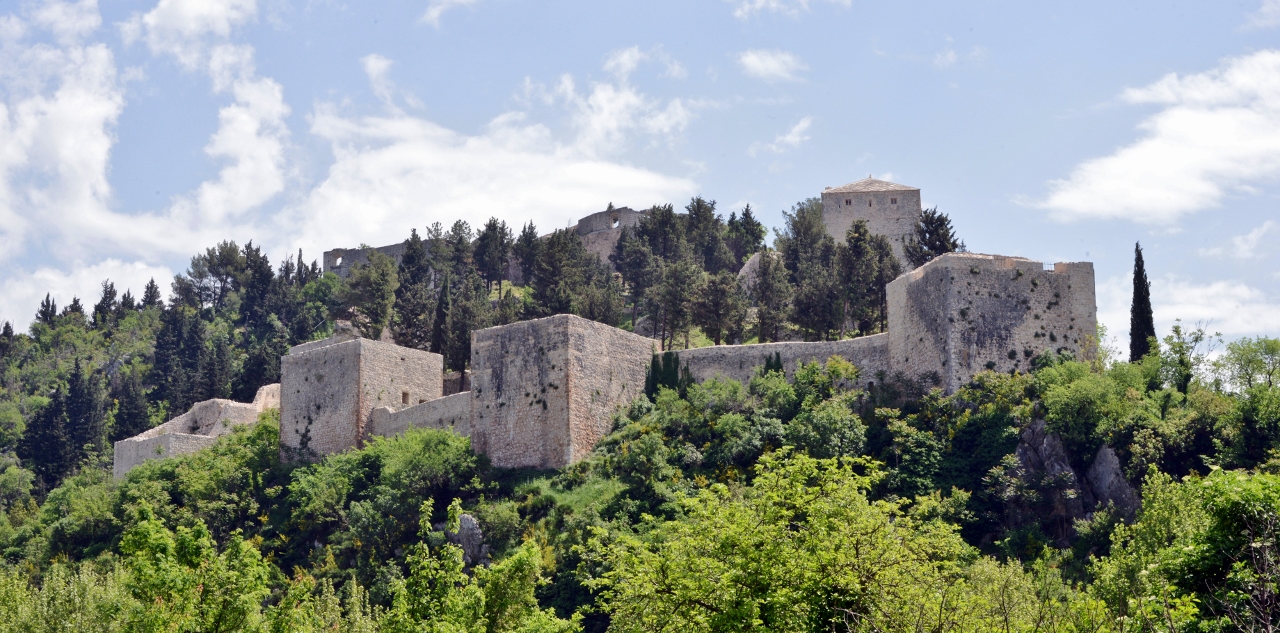
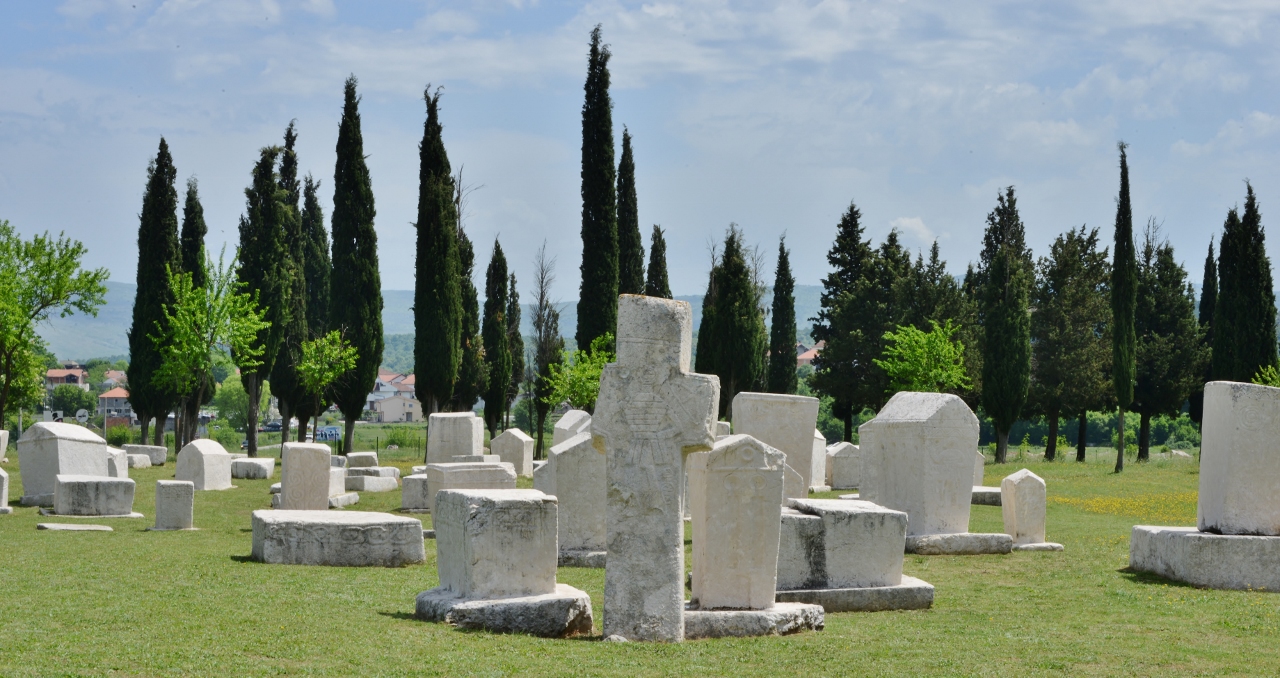
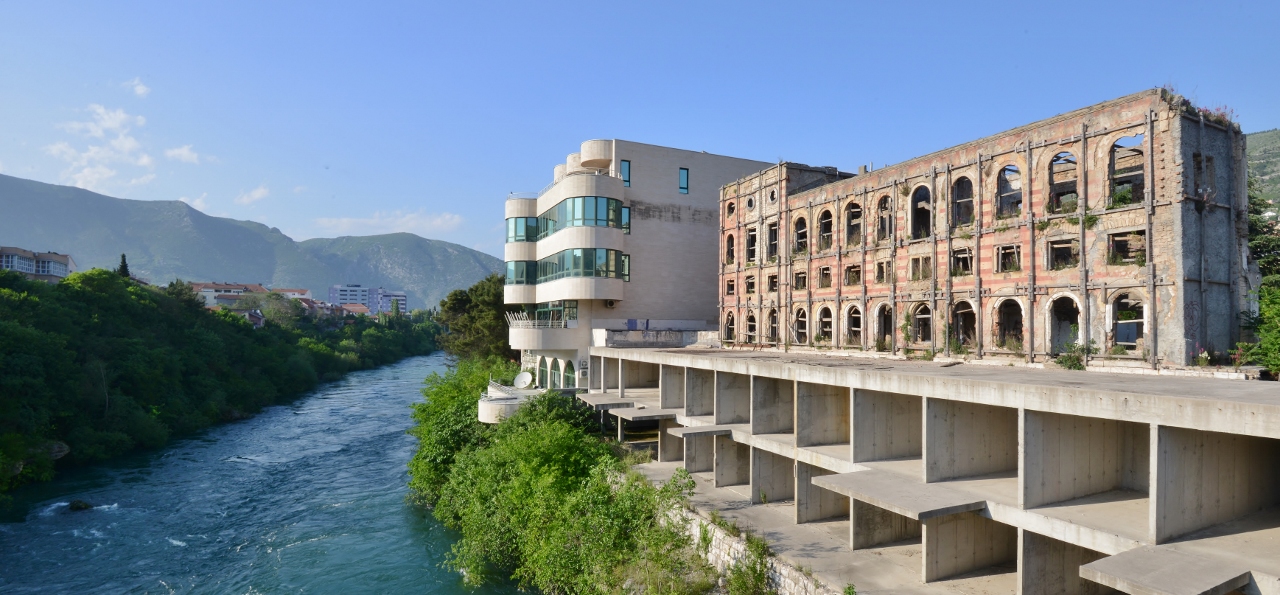
So I’ll start with the easiest part: We really didn’t know Bosnia had that much cool stuff to see. We were originally planning our trip through Croatia and we needed a way to get back to Zagreb, Croatia, to return our rental car so we thought we’d drive through Bosnia. As we were researching we kept finding more and more stuff to do. During our drive we were floored: Bosnia is beautiful, like gorgeous. We had no idea it was so mountainous and green. From what I’ve gathered, there really isn’t trekking or hiking culture / tourism in Bosnia which is really too bad because there were so many gorgeous places we visited where one could purposely get lost for weeks on end out in nature. It would be really neat to come back some day and spend time in the mountains disconnected from humanity. There is an Islamic influence throughout a large part of the country so Sarajevo feels like a mini-Istanbul (let me emphasize mini!) where there was the call to prayer and we were able to get the foods that we really enjoyed in Istanbul and other Muslim-majority countries we visited. There are really neat castles, settlements, and other important structures like the Mostar Bridge, littered throughout the country so even driving from one major city to another was broken up by short stopovers at cool sights. So much of the country was beautiful and fun to visit.

The price is right for tourism. Food, lodging, and other tourist activities are cheap in Bosnia, almost similar to what we paid in Cambodia, Thailand, and Vietnam but Bosnia is far easier to reach than South East Asia. The yearly wage for the average Bosnian is less than half of the US minimum wage and there is over 40% unemployment. The low wages make tourist money go really far. A very filling meal for two could be bought for $8-$10, drinks included, and admission to tourist places is generally a buck or two. While there is a tourism industry in Bosnia it’s pretty well relegated to the major cities. It was a bit harder to get along in the countryside as we met fewer people who spoke English and quick serve restaurants were far and few inbetween.

We used Airbnb exclusively and we found amazing hosts on accident. This was the next-level type hosting we found in Japan. Our hosts were genuinely concerned for our wellbeing and wanted us to be happy in every way possible. In particular, two hosts stood out – they were around our age and they spent a non-trivial amount of time with us showing their city and sharing their stories of growing up, what the current life is like, and what they think the future holds for the country. These were amazing experiences we were not expecting; this type of experience has happened so infrequently during our travel that it will forever stand out. Our hosts were even concerned for our belongings. In Sarajevo, our host told us “I’m not saying your car stereo is going to get stolen but it might” so we paid for secure parking smile emoticon.

The next easiest thing would be the history. Bosnia has been an area conquered and reconquered since antiquity. Fast forward to the Middle Ages and later where the area was predominantly Christian (Catholic and Orthodox) until the Ottomans rolled through and brought a lot of Muslims making Muslims the largest minority group with no majority group. Skip ahead through the two world wars and now Bosnia is part of Yugoslavia under Tito. The big cultural differences and any tensions are suppressed by the state so people live in peace because, well, they have to.

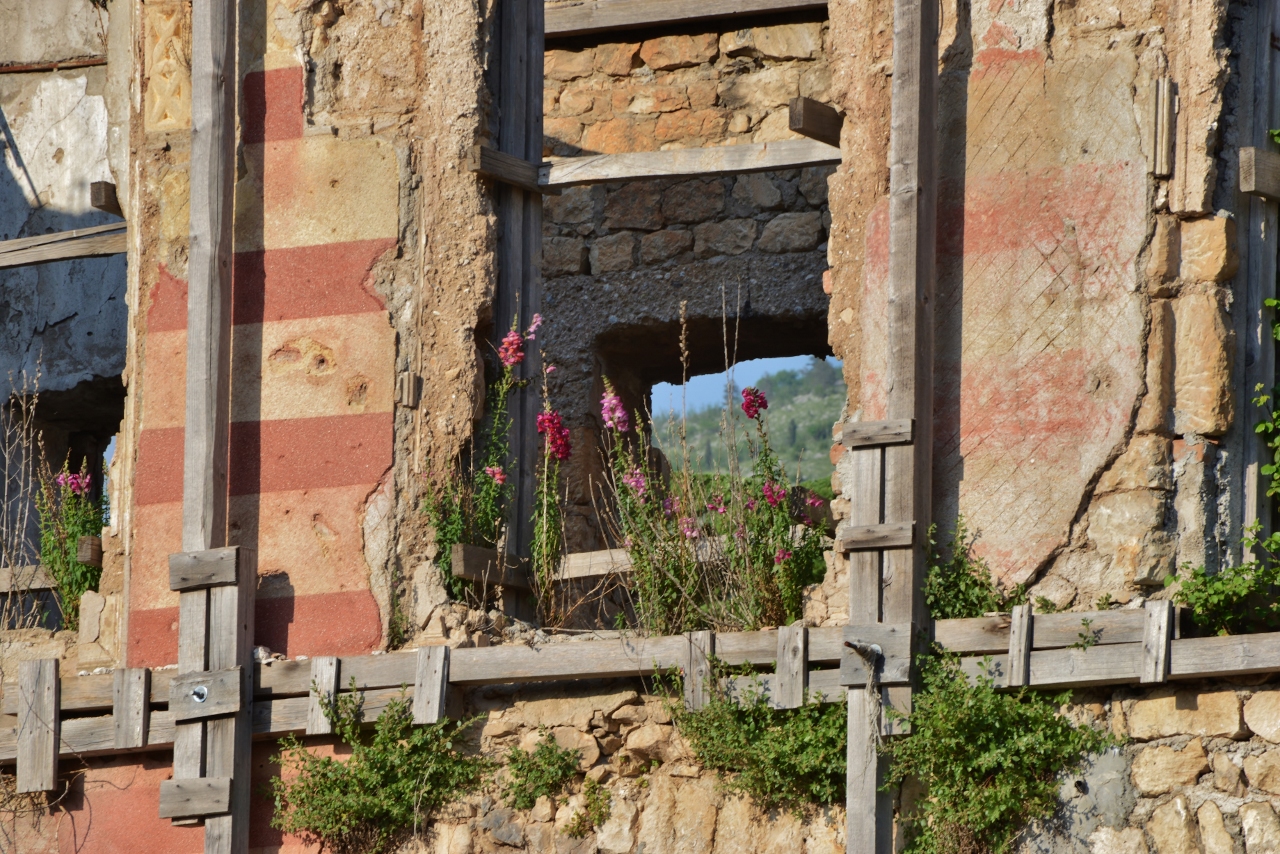
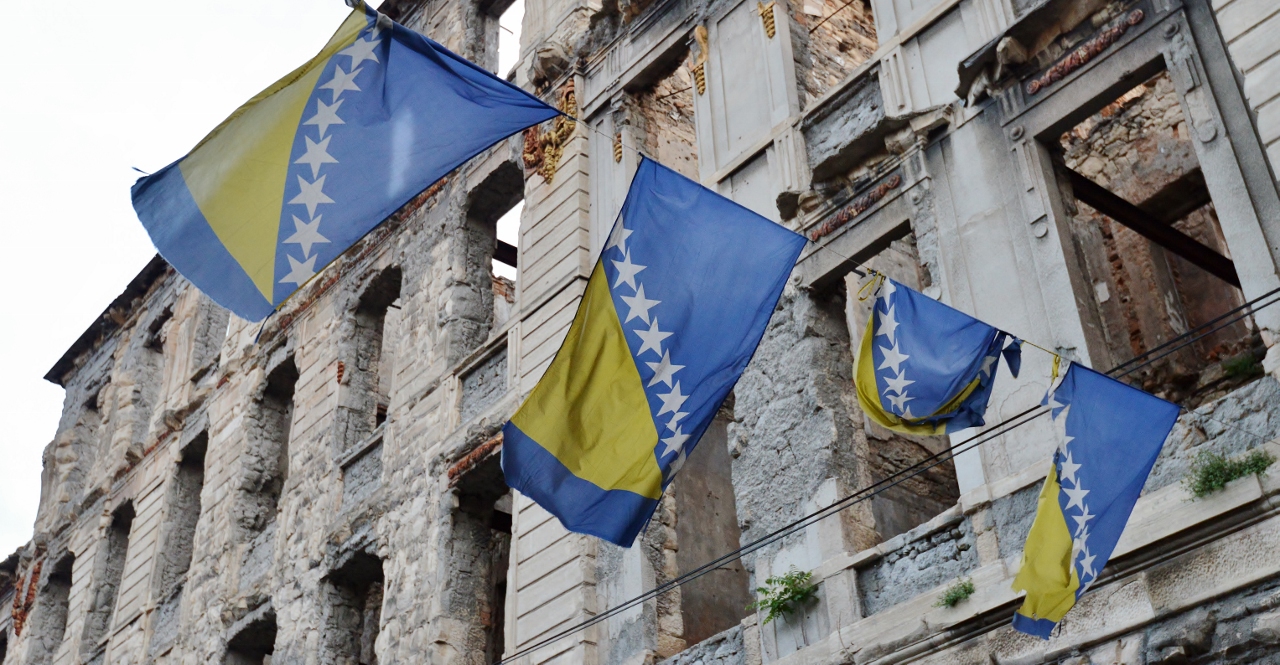
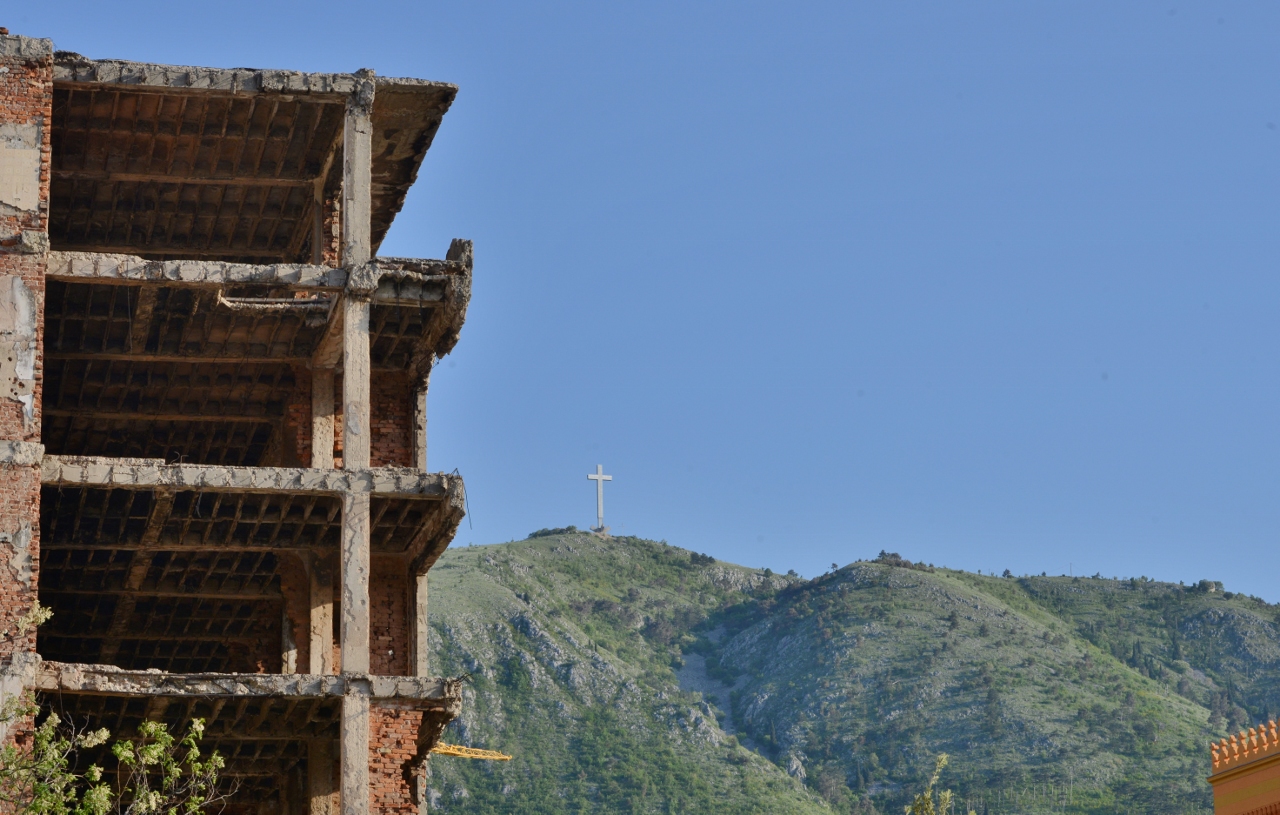
Now comes the harder parts to explain. After the fall of Yugoslavia in the early 90s there was a multiyear war and a lot of people died. The war was fought largely on religious and ethnic lines between the three major groups (Croat [Catholic], Bosniak [Muslim], Serb [Orthodox]) so multicultural cities, like Sarajevo and Mostar, were absolutely ravaged by the war. Neighbor turned against neighbor just because they prayed to a different god and/or had different lineage. The war seemed to make everyone go insane; on one extreme is the ethnic cleansing which occurred all over the country and another extreme is how one of the leading literary minds in the country before the war ordered the razing of the Sarajevo library destroying many very old and irreplaceable works of art. These were people living in peace under Tito and they all went insane, murderous, rampages once the oppressive and controlling government was gone. While the war is over, the scars of war are everywhere. From bombed out buildings all over Mostar to Sarajevo roses, the marks of war are impossible to miss. We thought we saw a lot of destruction and dilapidation when we were in Vietnam but we were unprepared for how much damage remains in Bosnia after nearly 20 years.

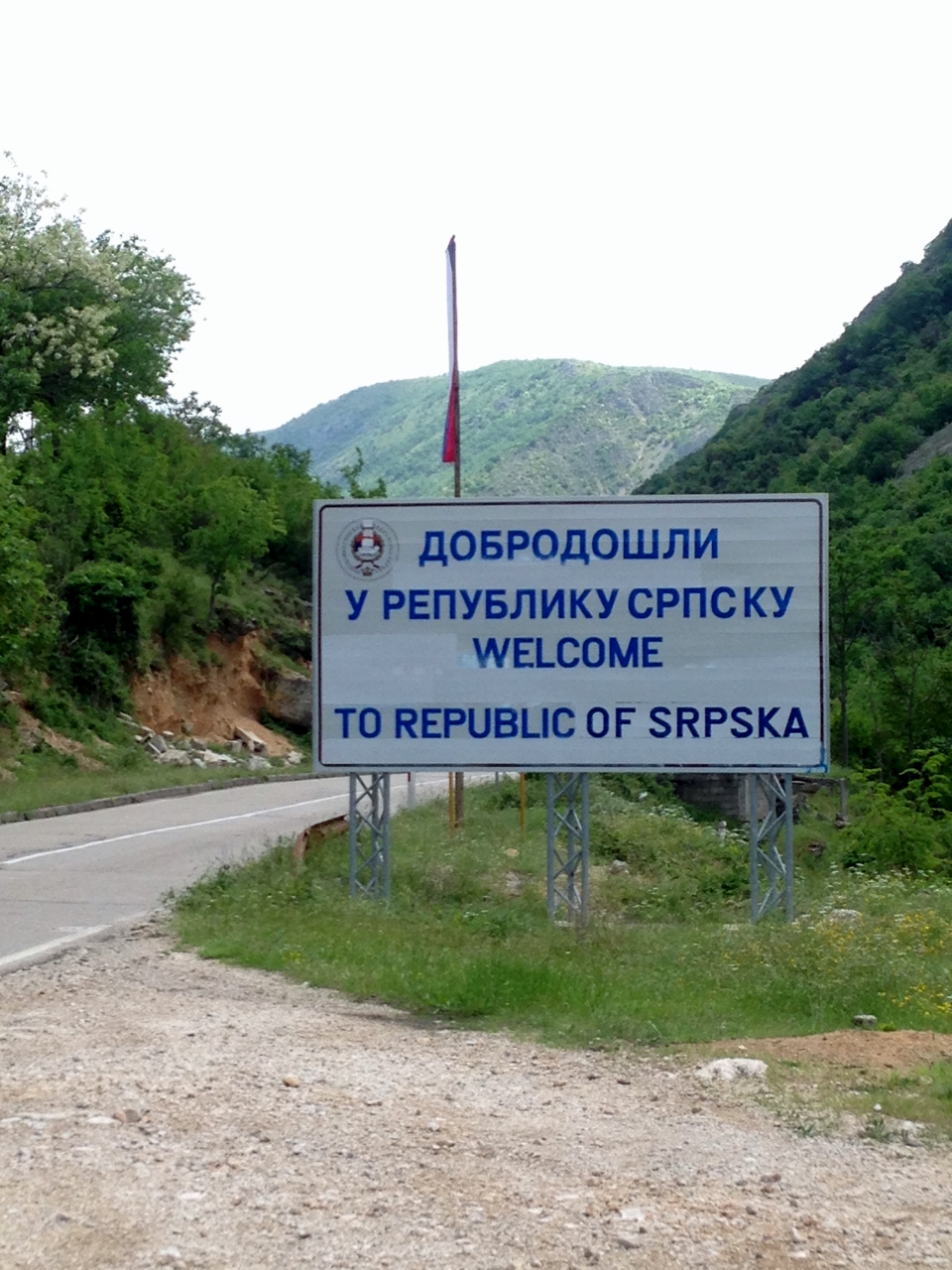
The outcome of the war brought a very weird government setup to appease the three different groups. Bosnia has: three prime ministers, three parliaments, three fairly autonomous regions, and separations like this all the way down to telecom providers and utilities. The US helped broker the peace and the creation of the unique government so the people living in Bosnia can give partial thanks to the US for their Frankenstein of a government. I asked a question to multiple people, “how do separate governments based on ethnic/religions lines promote unity between the three groups?” and no one really seemed to know but everyone was happy there wasn’t war. When discussing the government people would generally say things like, “it’s complicated”, “there is a lot of government”, and “it is not easy to get things done”, simply because they have different governments for different groups living in the same region.

The hardest thing to explain, which leaves it’s imprint everywhere in the country, is just how different the groups are and how that makes Bosnia uniquely different than anywhere else we’ve visited. We have been to many countries with different ethnic groups and the US is very diverse. Bosnia is different. Very different. Yes, technically, it’s one country but it’s still very separate in a lot of ways. The example that maybe easily describes the WTFness of Bosnia is how the country goes about supporting their country’s soccer team. There is a Bosnian soccer team and much like anywhere else a lot of the citizens cheer for their national team, and, much like anywhere else, soccer riots can happen due to the zealousness of the supporters. What’s really unique about Bosnia is how a soccer riot can start during a Brazilian / Croatian soccer match in the little city of Mostar. What do the Brazilians have to do with the soccer riots? Not much, to my knowledge there are few to no Brazilians in Mostar, the game wasn’t held in Mostar so Brazilians weren’t the ones starting the riots. The riot happened between two of three major ethnic/religious groups where one group was cheering zealously for the Brazilians to beat the Croation team and the other group was supporting zealously supporting their ancestral home team so naturally (I guess?) a soccer riot breaks out.

American culture like music, movies, brands and such are pervasive all over the world and Bosnia is no different. It’s always been neat to drive around in another country and hear a similar top 10 to the United States. We can be far away and still have a flavor of home. The odd exception to this is when we were driving around Bosnia, in the midst of war ruins, listening to the Beach Boys sing about good times and Kokomo. It was hard to wrap my head around it and it was a big WTF moment for me.

We drove through two of the three semi-autonomous regions of the country and it was super easy to discern the differences. Remember: I grew up in South Dakota. We thought Minnesotans, North Dakotans, Wyomingians, and Nebraskans were all very different. If the differences I felt in South Dakota were on a color spectrum it’d be comparing light blue to slightly lighter blue and trying to exaggerate the differences. The differences we felt in Bosnia between the regions were like comparing blue to red, very different, no exaggeration needed. It was like we went to different countries far apart but really we drove a half hour. It was pretty cool experience and something we haven’t really experienced anywhere else.

So that’s Bosnia based on our experiences. It was a truly remarkable place. We had such a good time, we’d love to go back and explore more of the country.

Enjoy the photos!

Chris W.

Montenegro 2015

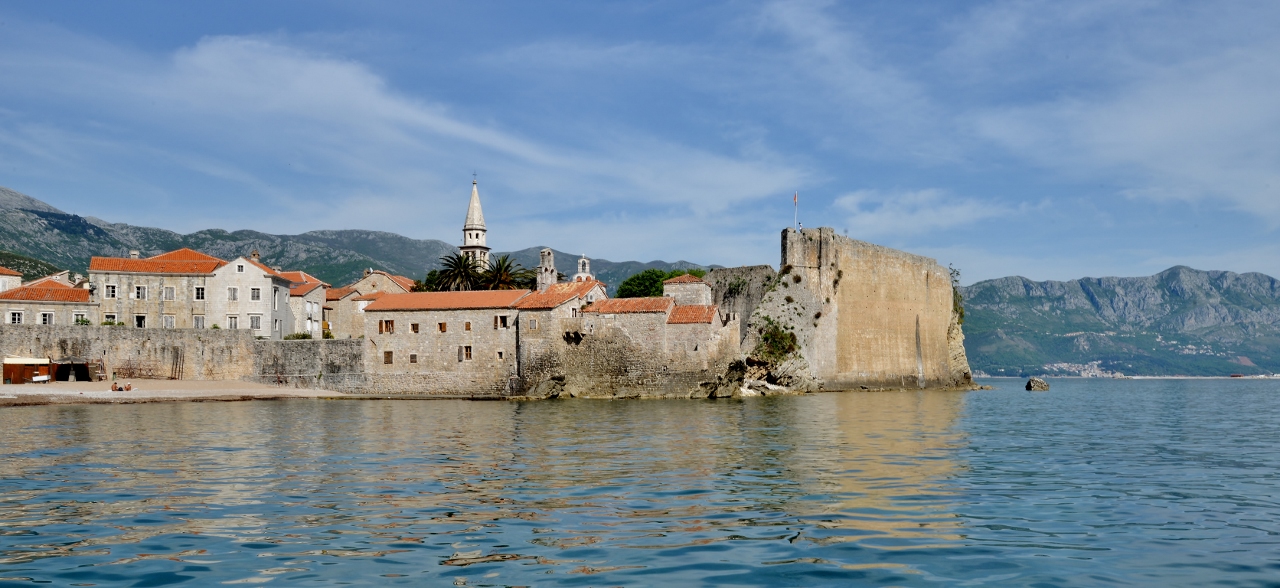
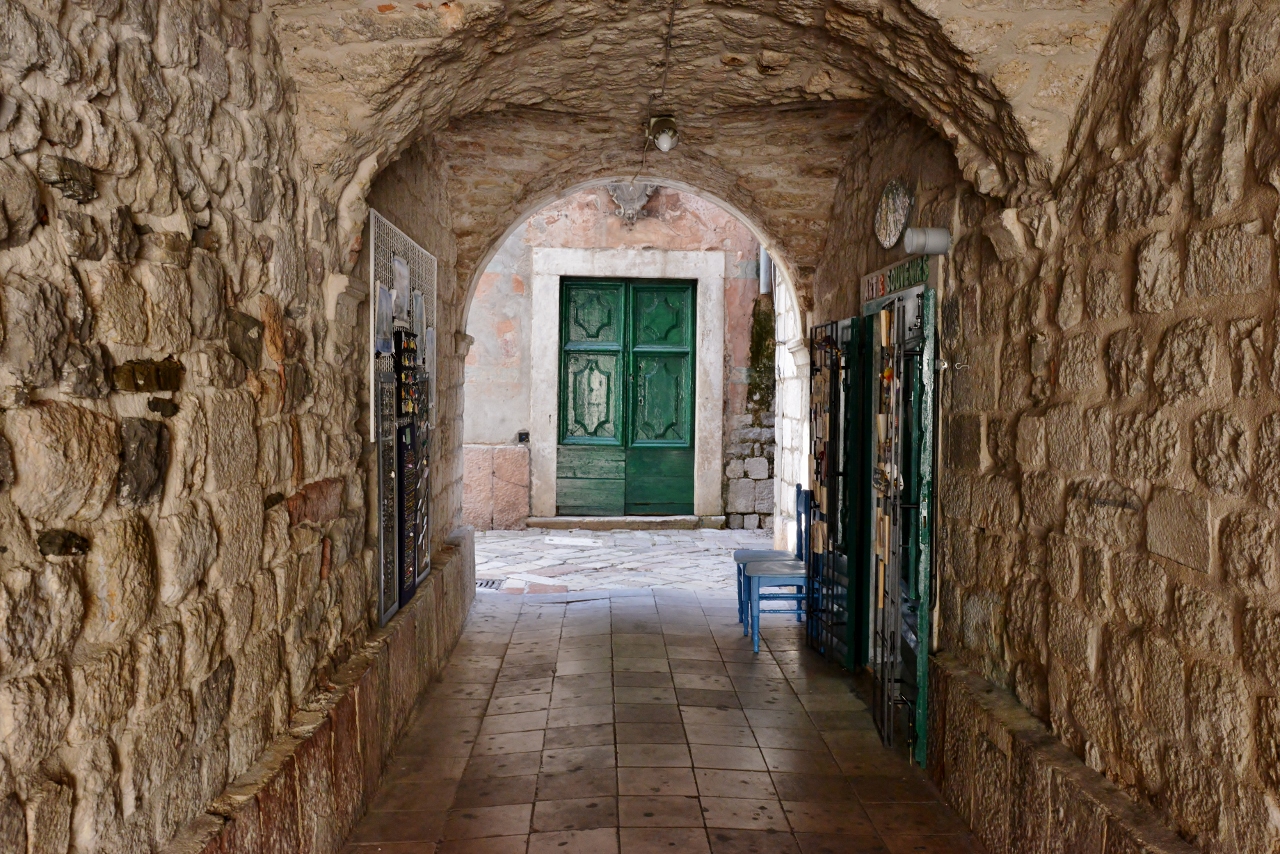
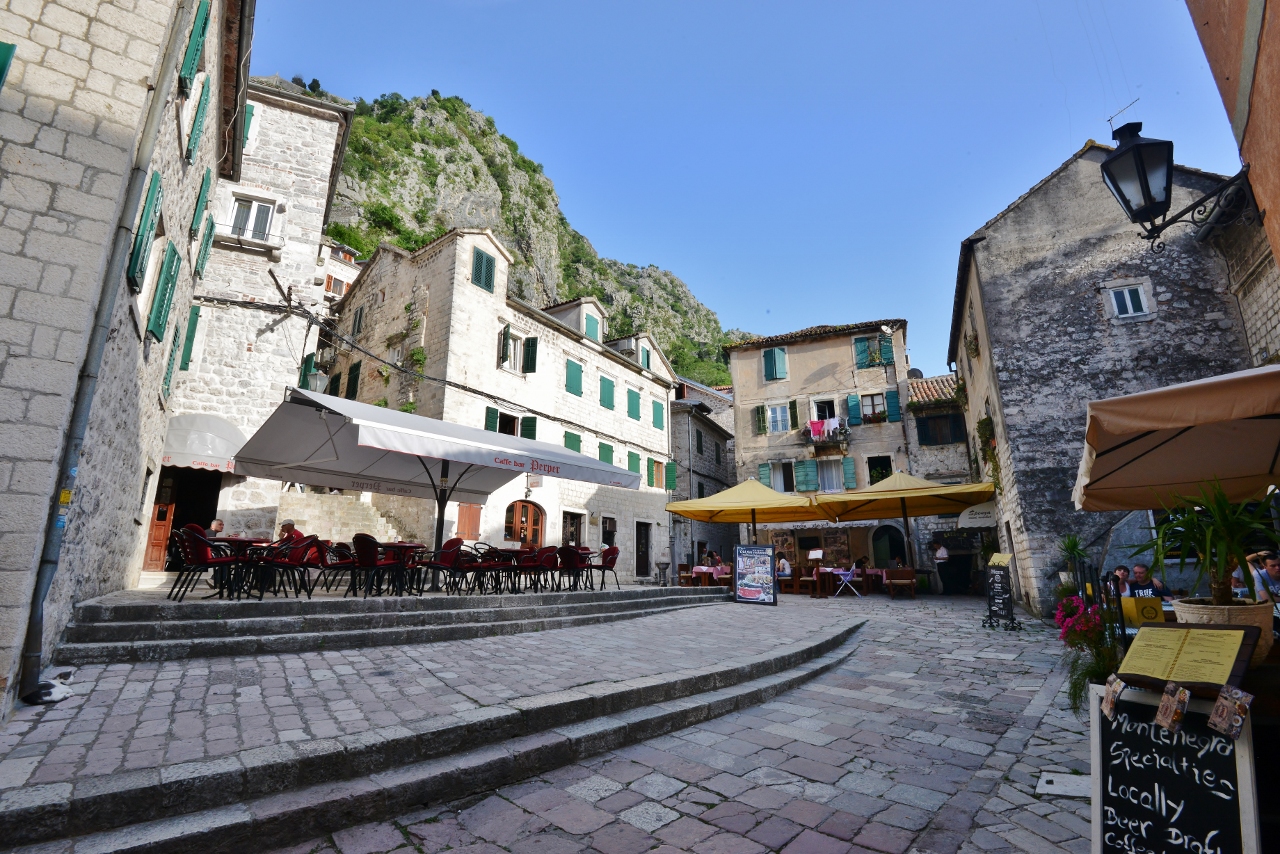
Montenegro was spectacular! We only had a few days in the country so we didn’t see much. The parts we did see were amazing! The scenery is unlike anything we’ve seen before and we thoroughly enjoyed our time.

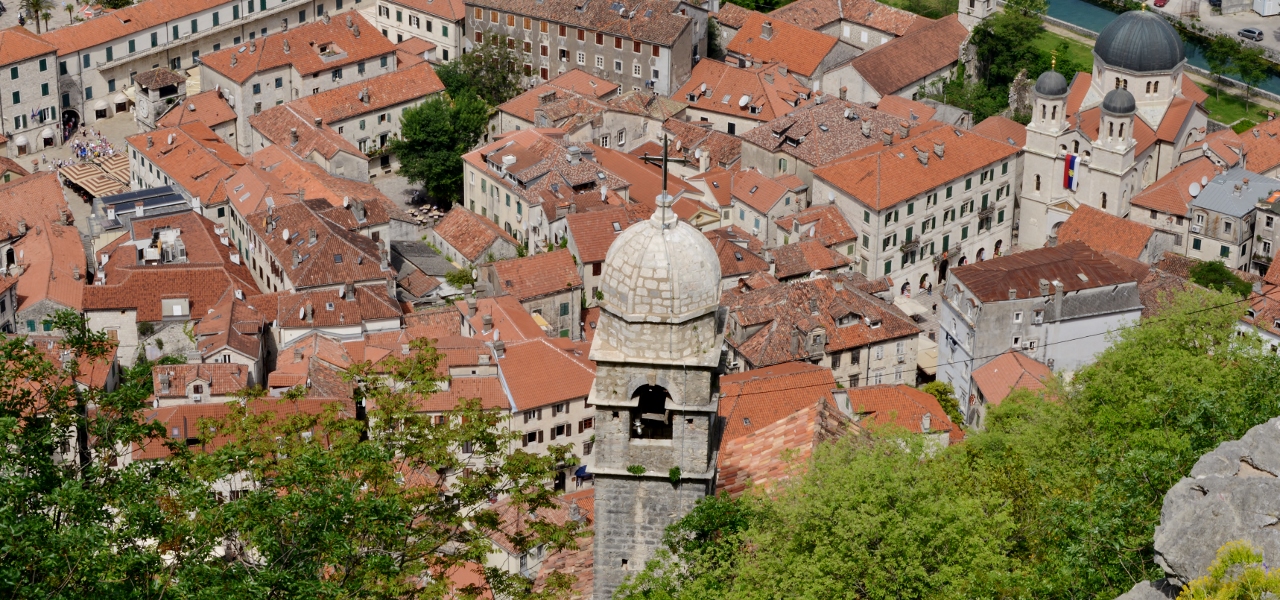
Montenegro is a new-ish nation after gaining full independence in 2006 from Serbia. Prior to about a month ago, if someone asked me to locate Montenegro on the map I’m pretty sure I would have looked very hard at Africa. While we were planning our trip through the Balkans I happened to see a recommendation for a day trip into Montenegro from Croatia because “it is close and worth it”. After reading this advice and learning where Montenegro was located, we decided to stop for a few days in Kotor, Montenegro.

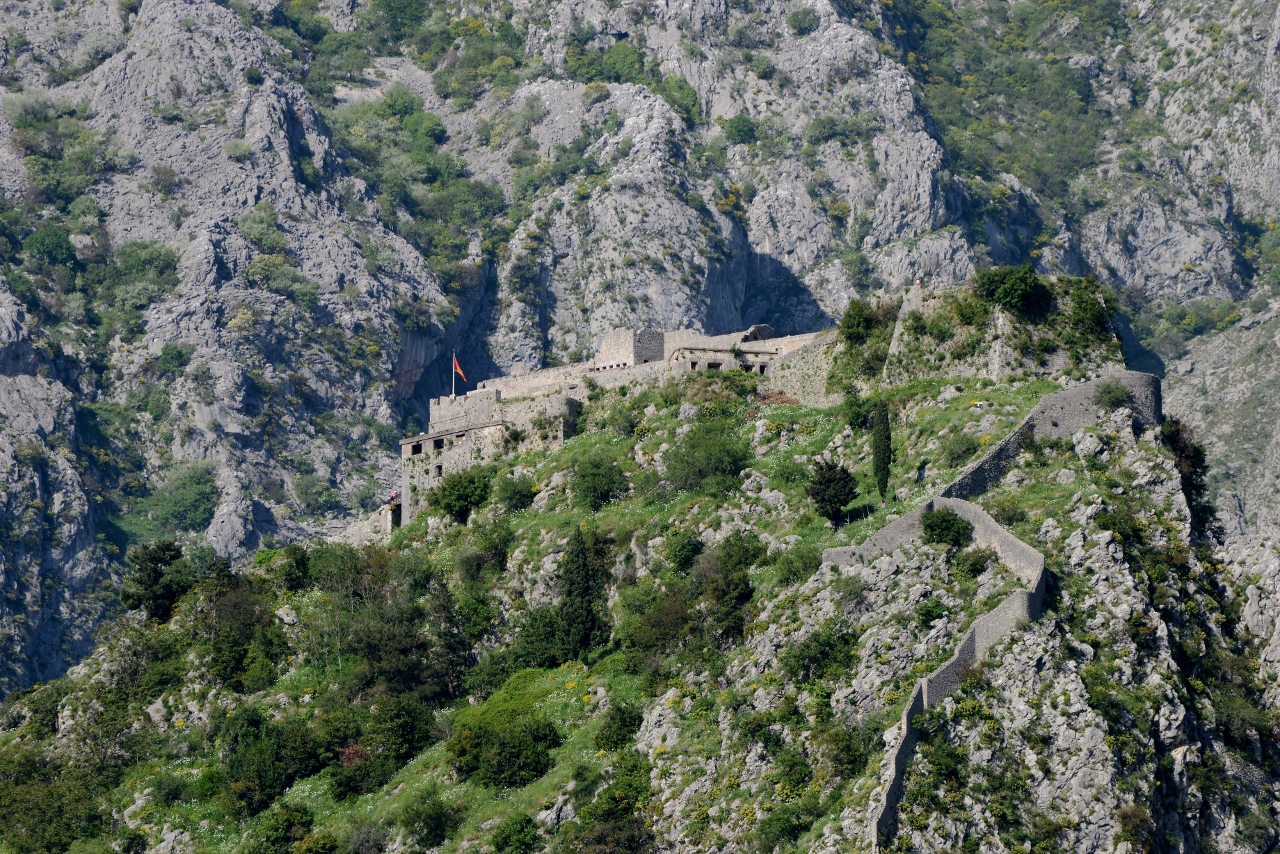
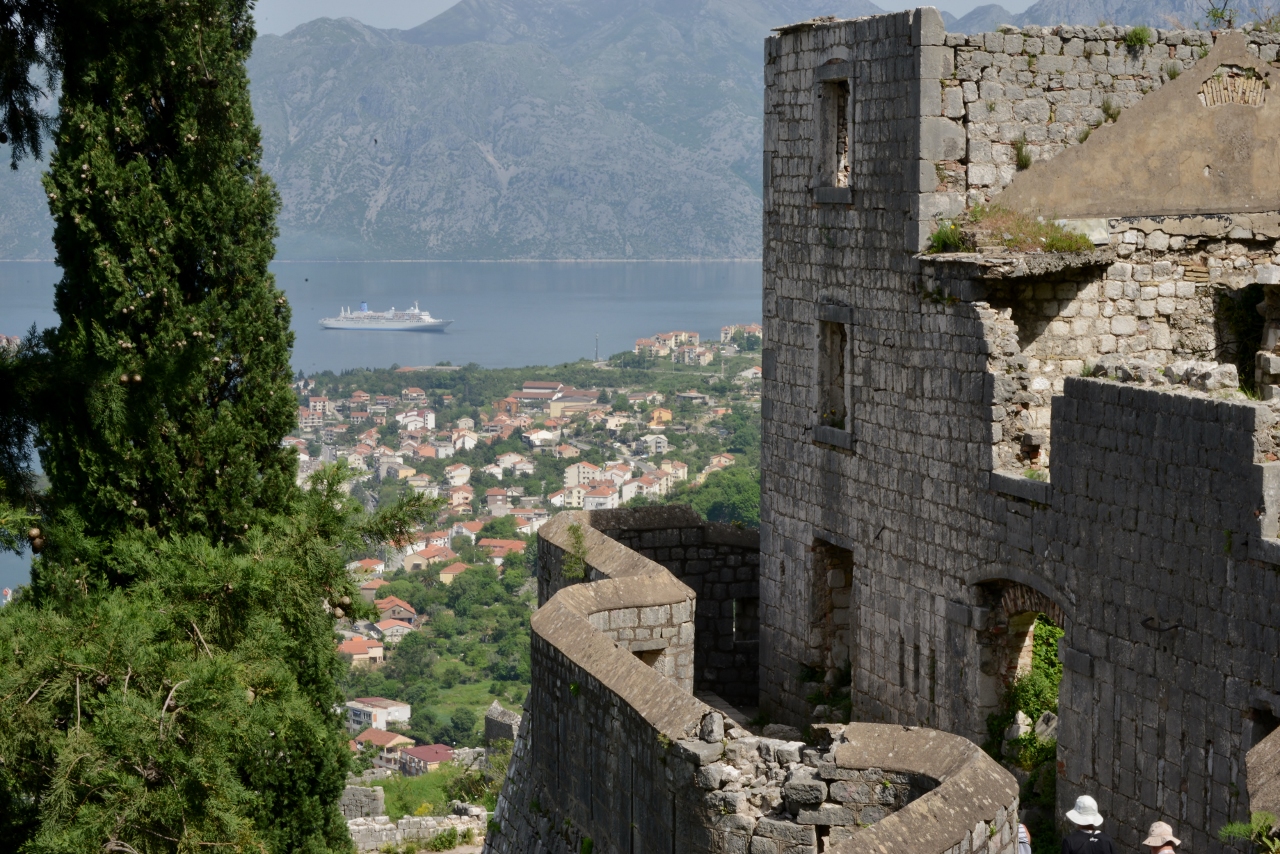
Once we left Croatia it was clear we were in an area where road rules were more suggestions than anything else. We saw stoplights but we didn’t see any in use so crossing someone’s right of way in an intersection was sometimes a rather hairy experience. Besides driving, the feel is very similar to everything else we had experienced on the Dalmatian Coast and the food was similar too. The city was built in Roman times and then it was a very important Venetian city for trade. The Venetian Republic’s emblem, the lion with wings, can be found in multiple places around the city and in the city walls. The old town itself is tiny and pretty much has no straight streets. The old town had a super-chill feeling to it and there weren’t mobs of tourists like what we saw in Dubrovnik. On our last day, four cruise ships showed up and the town still didn’t feel like it was too crowded.

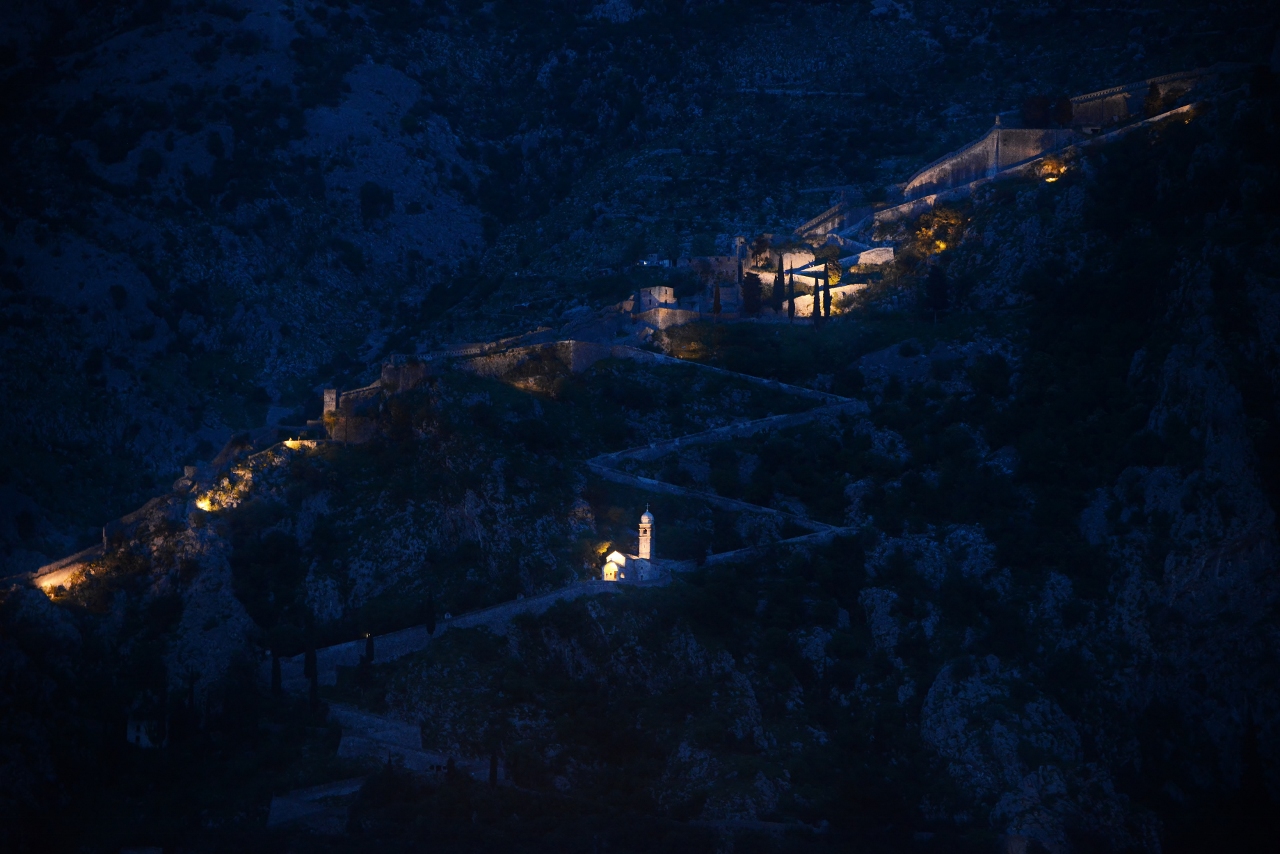
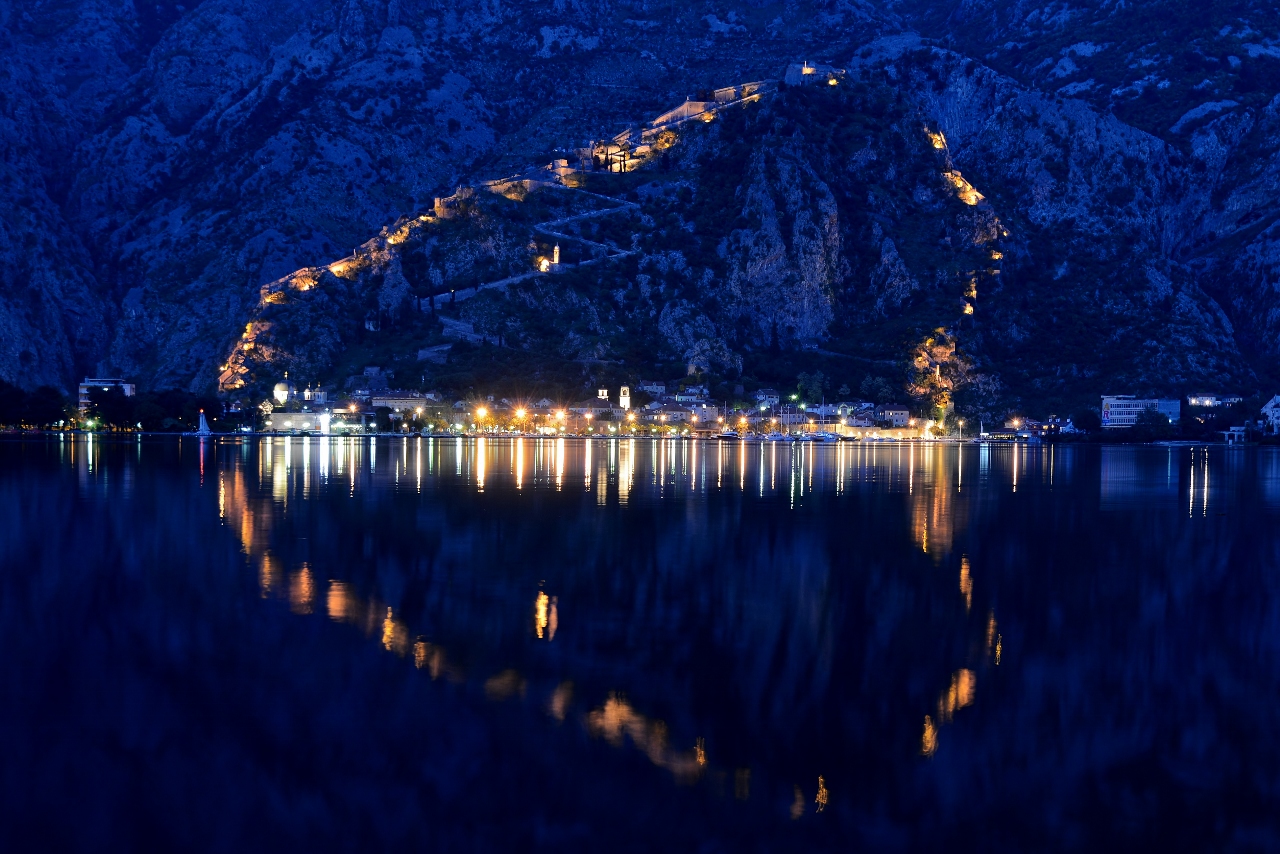
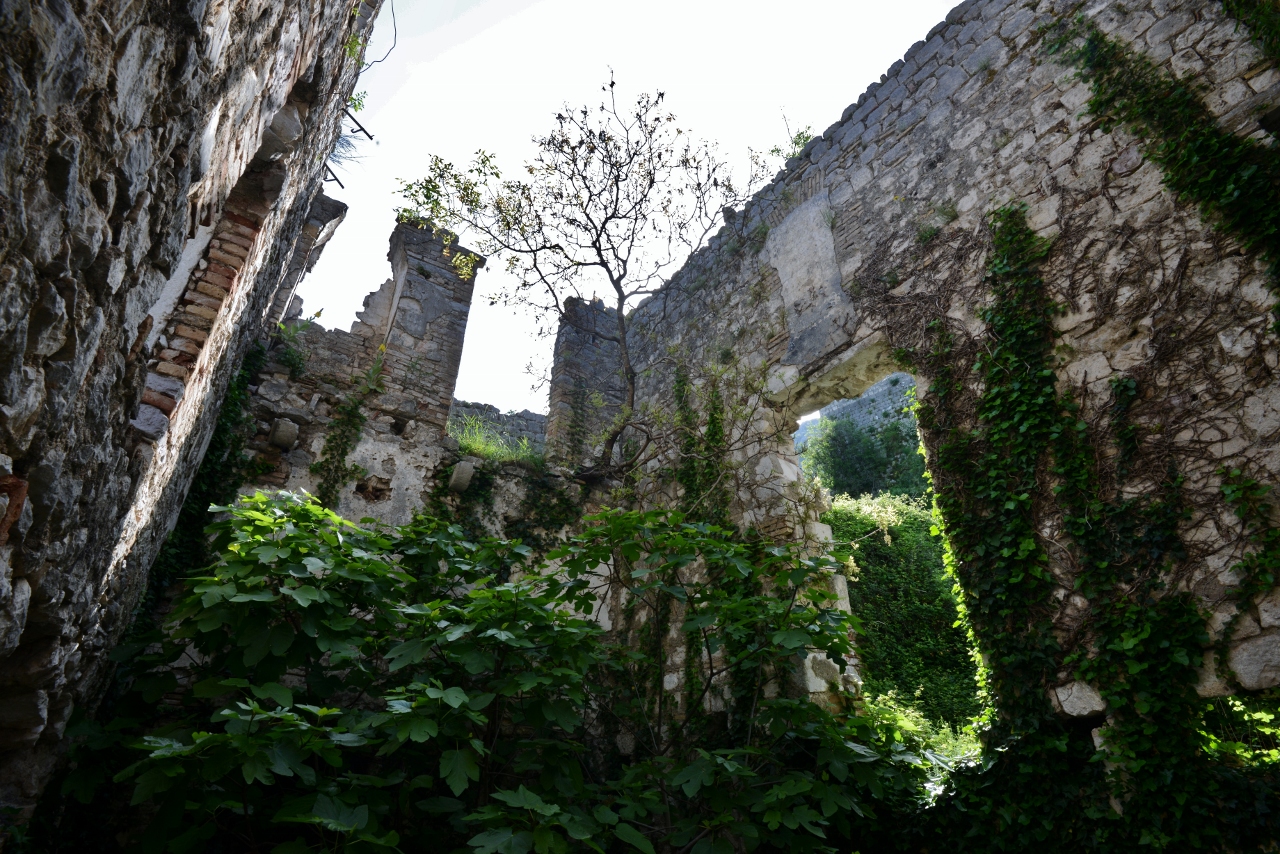
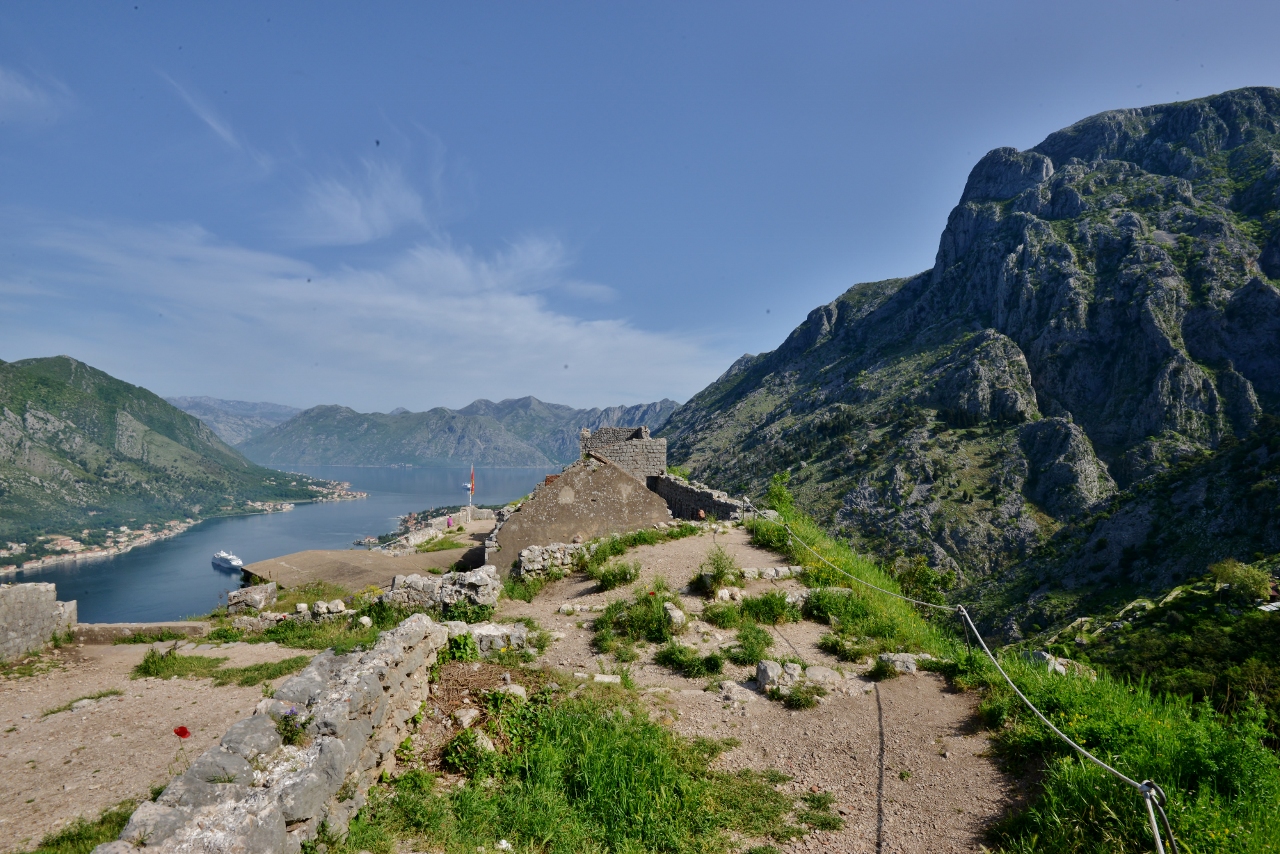
There are some large walls protecting the city and they go up the mountainside behind the city. I hiked up to the top and enjoyed a great view. In Kotor, the city walls are not refurbished so there’s quite a few areas with loose rocks, big steps, or steep drop-offs. There are multiple paths to the top and there’s really only one good path with the rest being labeled “high risk” in the pamphlet they give all tourists. It doesn’t matter though, tourists can go anywhere they choose and make any adventure they deem appropriate, high risk or low risk. This is pretty common in a lot of places we’ve visited and is pretty different than the US where many things are closed off due to safety concerns. I imagine if tourists die they simply think “no matter, there will be more”.
While hiking the walls in Kotor, I managed to meet a fellow American around my age and quickly learned he had lived in South Dakota and Albert Lea. Being in Montenegro and being someone who has lived in Minnesota and South Dakota, I’m pretty this made us family.

Our time in Kotor was too short! It was a stunningly beautiful place and a place we really enjoyed. Our time there was nearly perfect and I’m not sure how it could have been any better!

Enjoy the photos!

Chris W.

Kyoto / Osaka / Yoshino Japan 2015

Our time in the Osaka / Kyoto / Yoshino area was quite rainy and cold but we’ve continued to have great experiences!

Kyoto is the religious / cultural center of Japan. There are many temples and shrines all over the city. We spent two days in Kyoto and saw just a handful, I think it’d take months to visit all. We visited on the weekend so the place was wall to wall tourists. Even though it was busy it was still very fun to see everyone enjoying the temples, the blossoms, and see all the people walking around in their traditional Japanese clothes.

We took a day trip out of Osaka to Yoshino to visit a forest of cherry trees. There’s something like 2,000 cherry trees in the small valley area. We were fortunate enough to have the weather break-up enough to see the valley lined with cherry trees in bloom. Even though it was cold and rainy it was amazing! Well worth the three hour train ride each way.

We went to a Geisha show / musical that was a rather interesting cultural experience. I didn’t really know what to expect and I left a bit flummoxed. The costumes were very pretty but we had no idea what was going on during the show since it was in Japanese. It was a lot like Chinese opera but it neither sucked nor did it hurt my ears. Overall, it was a pretty neat experience and I think I’d go again but I’m not sure.

We’ve found more helpful and kind people along the way. I have two great examples: first, as I mentioned, the weather hasn’t been great, so our host ended up getting us a gift of fancy jello (not kidding) as a condolence. I didn’t realize it until that moment but surprise jello is always great and welcomed! Second, it’s hard for us to find places in Japan because street names and addresses usually aren’t posted and a lot of the time Google Maps will have businesses in the wrong location so it’s the worst of both worlds. We depend a lot more our hosts to help us find addresses and routing. One of our camera lenses gave it up to the gods so I started looking online for a store we could visit near us but quickly gave up. I emailed our host and told her that we were looking for a specific lens and about how much it should cost. In very short order she found a store in her little city, she sent a message with the location resolvable in Google Maps, she had called the store and verified they had the lens in inventory, she shared the price and wanted to know if she should call them back to hold the lens for us. Talk about service!

Traveling around Japan and being a tourist in Japan is probably the greatest thing ever. It’s quiet everywhere so we can sightsee in peace even when there are large crowds, people are incredibly courteous so people aren’t cutting in line or barging around the place, everything is on time, there are no scammers, prices are exactly as advertised with no bait&switch, things are very good values, locals are incredibly tolerant of tourist doing stupid things (as we know from the stupid things we’ve done), and when we need help there’s always plenty of people to help us. It is spectacular. We love it. We are sad we are leaving in about three days

Enjoy the photos!

Chris W.